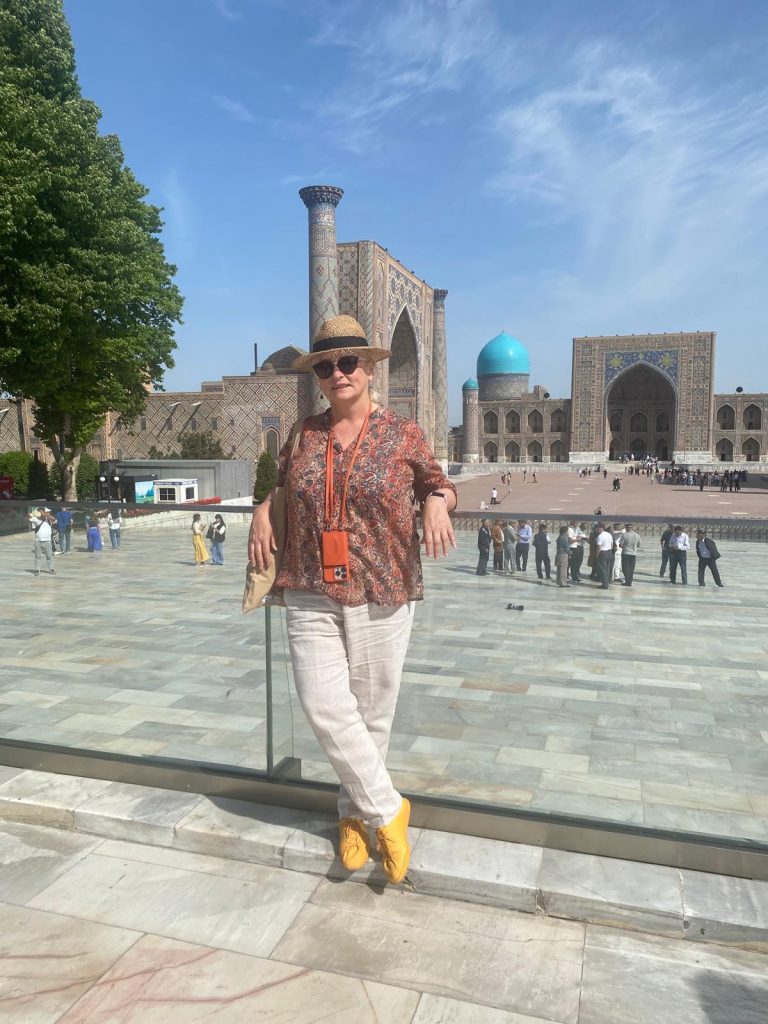
At the Registan, Samarkand — a place on the Silk Road that feels alive in every corner.
I came to Uzbekistan thinking about botanical art — about plants, structure and natural form. I came back with something much wider. For two weeks, travelling with six other artists, I moved through a living exhibition of colour, history and human creativity and it changed not only what I saw but how I see.
When I travelled to Uzbekistan in spring 2025, I went as a botanical artist, looking for plants, flowers and quiet nature moments that could inspire my work. But the trip became something much bigger than I expected. We were a small group of six artists, each with our own way of seeing the world and from the very beginning there was a shared feeling that something special was unfolding. Every day brought a different mood, a different light, a different layer of inspiration.
At first I stayed close to what I know best — plants, botanical detail, natural structure. But very quickly I found myself drawn into something else completely.
Cities That Felt Like Painting
Samarkand felt overwhelming in the best possible way. As a place on the Silk Road, it carries centuries of history and yet it feels alive in every corner. Colour, pattern, light and scale all exist together. I often felt I could not take it all in fast enough. Every building looked like a finished artwork — almost like a museum without walls.
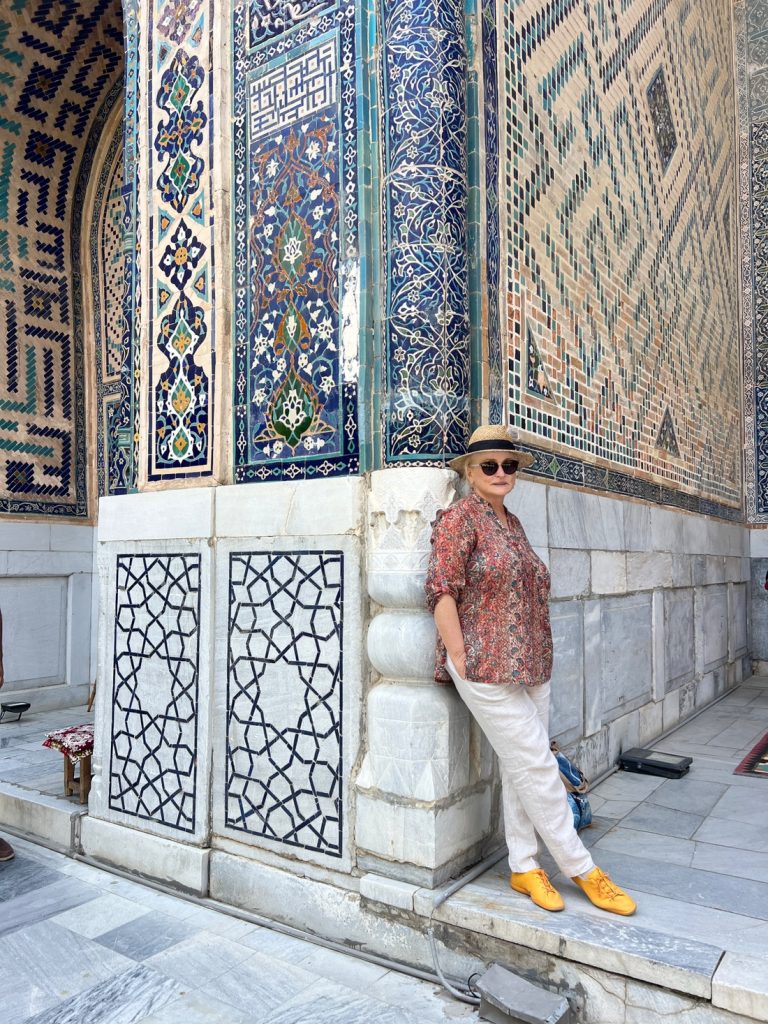
Samarkand — colour, pattern and light, all existing together.
Bukhara felt softer and more reflective. There was a quiet rhythm to it, a sense of space that slows you down. The markets were full of silk, cotton, wool and ceramics — all rich in texture and handmade detail. For me, as an artist working with botanical subjects and natural form, this sense of craftsmanship felt deeply familiar. The people were warm, open and generous and every interaction felt human and unforced.
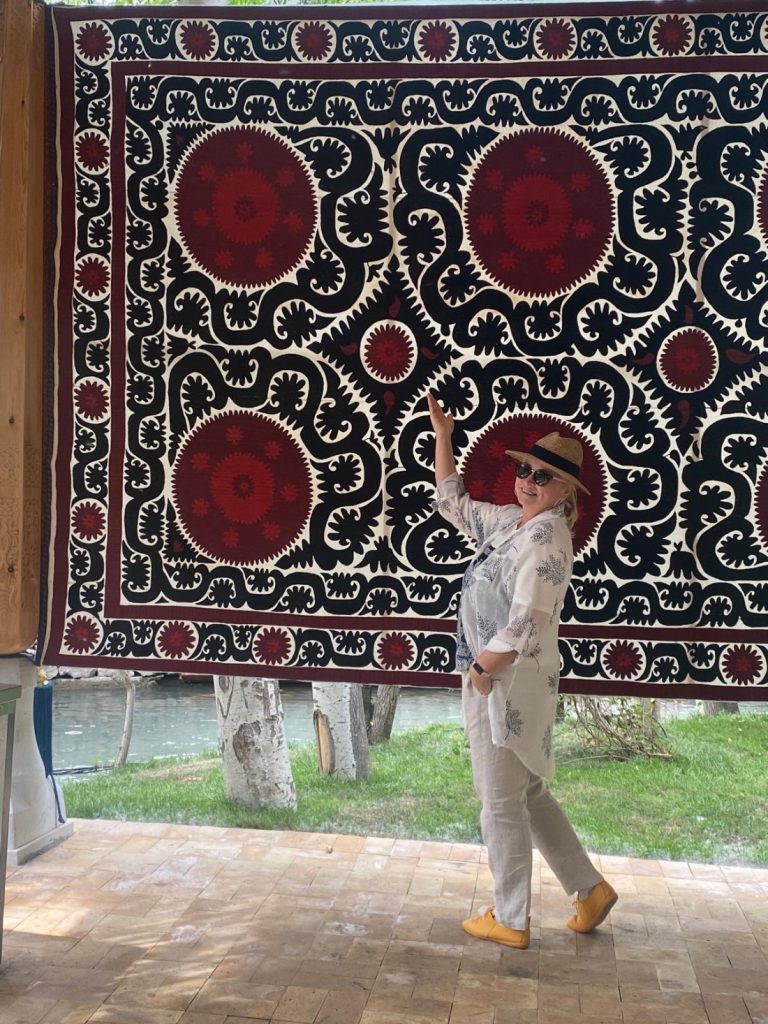
Bukhara — silk, cotton and the handmade detail of a suzani.
Khiva stayed in my heart in a different way. It felt like stepping into another time entirely. Narrow streets, carved wooden doors and sun-warmed walls created a feeling of stillness. I remember watching the evening light turn everything golden, almost like a painting slowly changing colour. It was peaceful, but also deeply emotional — a place that asks you to slow down and simply observe.
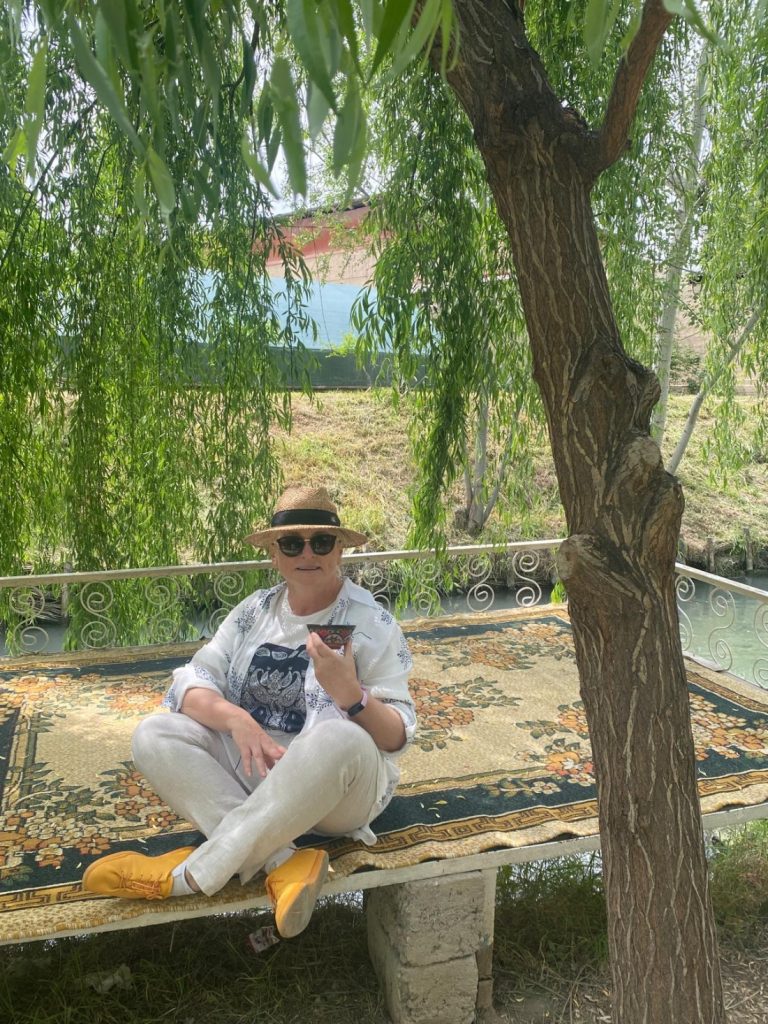
A quiet moment — tea beneath a willow, the kind of pause this country invites.
Nukus And The Savitsky Museum — The “Louvre Of The Desert”
In Karakalpakstan, I visited one of the most extraordinary places of the entire journey — the Savitsky Museum in Nukus, often called the “Louvre of the Desert.” It felt remote and almost impossible that such a museum exists there, far from the major cultural centres of Europe and Russia.
What stayed with me most was the story behind the collection. The museum holds a huge and unique archive of Russian and Central Asian avant-garde and modernist art, mainly from the Soviet period. These artists were not following the “official” art style of their time. Many were experimenting with abstraction, symbolism and expressive form at a time when such work was discouraged or even suppressed. Among the artists represented are Wassily Kandinsky, Alexander Volkov, Ural Tansykbayev, Lyubov Popova and Vladimir Lysenko — voices ranging from early abstraction to deeply expressive interpretations of Central Asian landscape and culture. Some were ignored, some were censored and many were not recognised during their lifetimes. Their work was never meant to survive in the system they lived in.
And yet, it did survive. The collection was gathered and protected by Igor Savitsky, an artist and collector who believed deeply in artistic freedom and cultural memory. Because of his vision and persistence, thousands of works that could easily have been lost are still preserved today.
“Walking through those rooms felt powerful. Quiet, but powerful. It reminded me that art can survive even when it is not accepted — and how fragile cultural memory can be.”
The Desert And Its Small Life
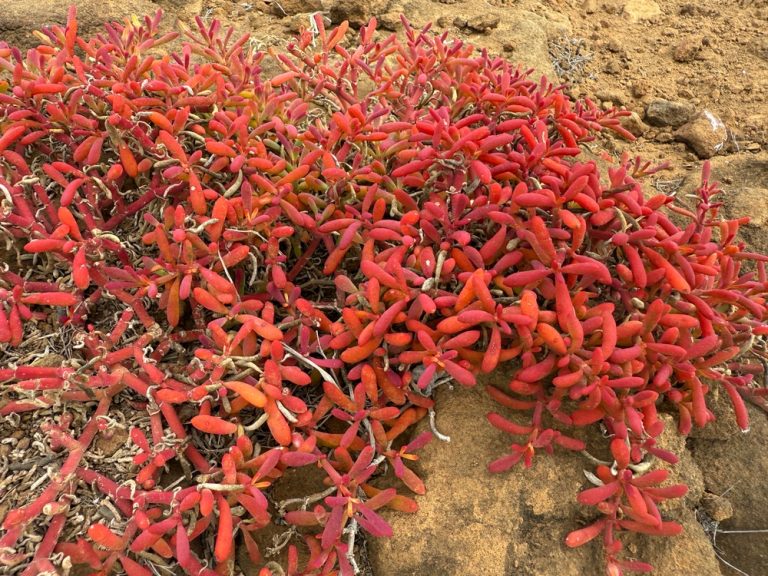
During the trip, we also travelled into a desert landscape in another region of Uzbekistan. It was simple, open and extremely quiet — a completely different visual world compared to the cities. I was looking for spring plants and I found them in the most unexpected places: small desert flowers, tiny green shoots and fragile plants growing directly from sand and dry soil. Nothing dramatic or decorative. Just life doing its best in a very demanding environment.
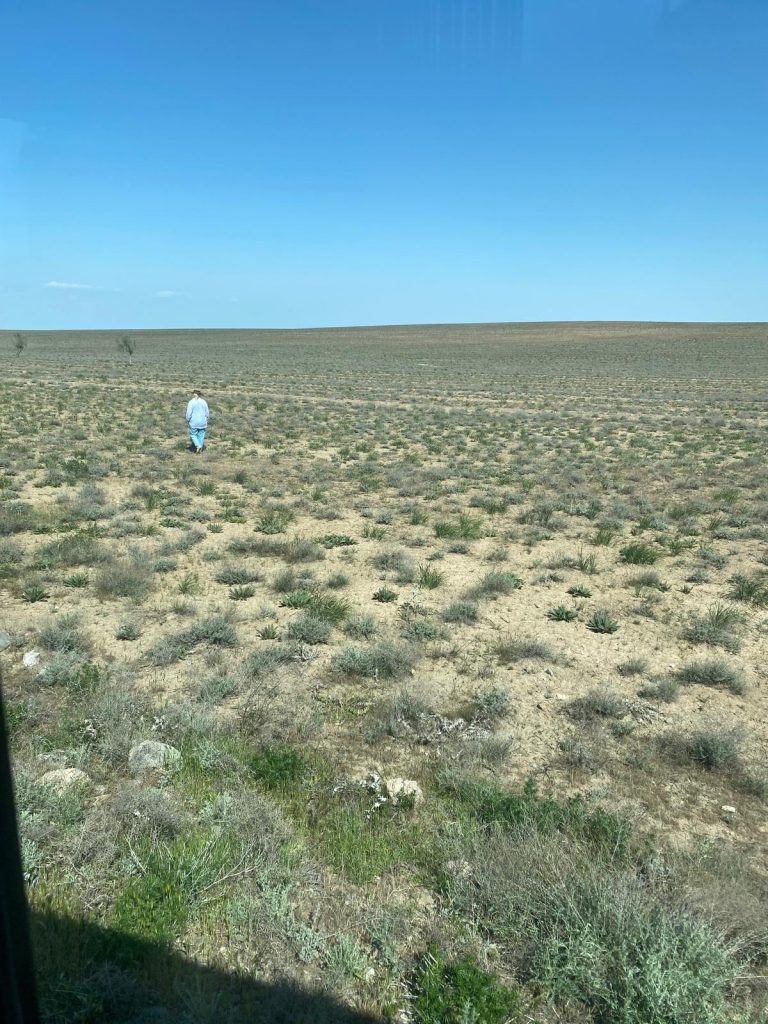
Searching for spring plants in the desert — open, quiet and full of small life.
From a botanical perspective, this was deeply moving. These plants had strong survival intelligence — adapted, minimal, efficient. The wind made it difficult to sketch and everything kept shifting, but I tried to capture not only their shape but their presence. These desert plants stayed with me long after. They felt like a reminder that resilience can be quiet.
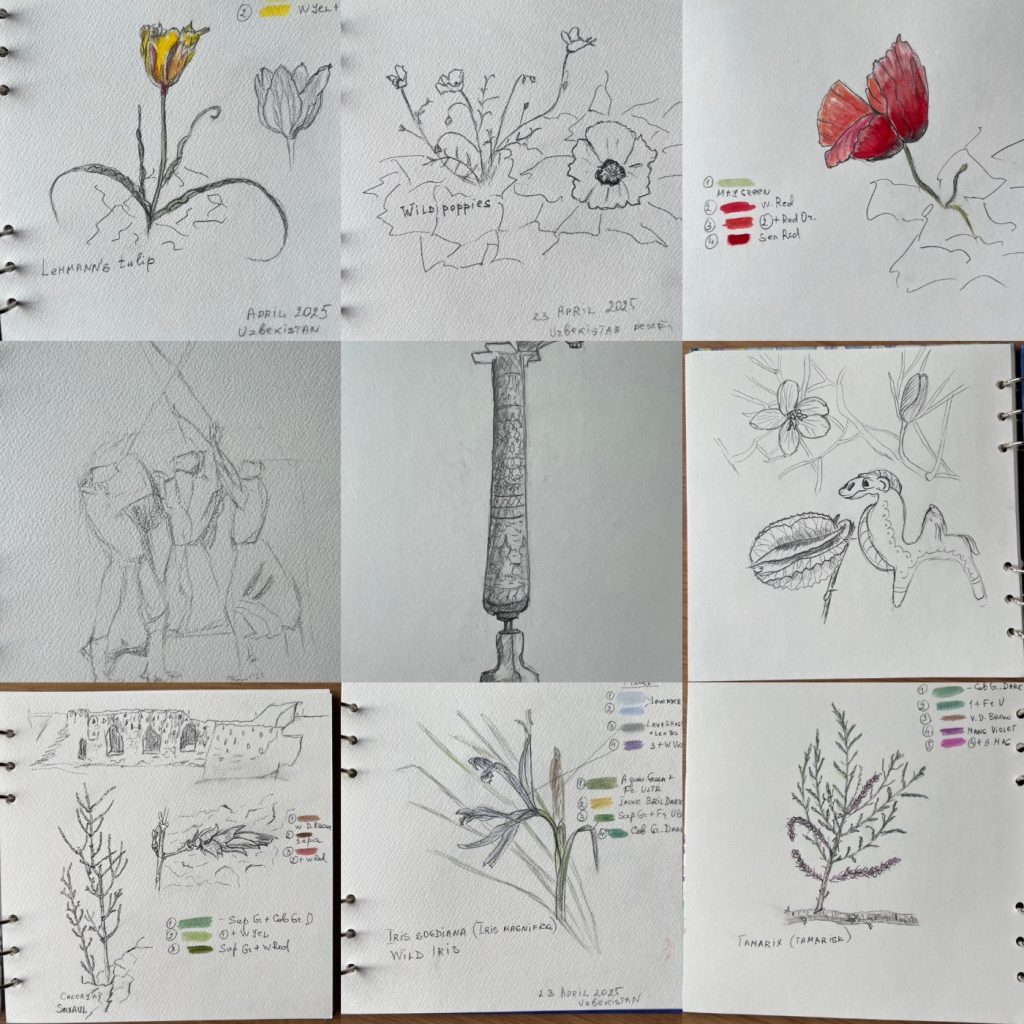
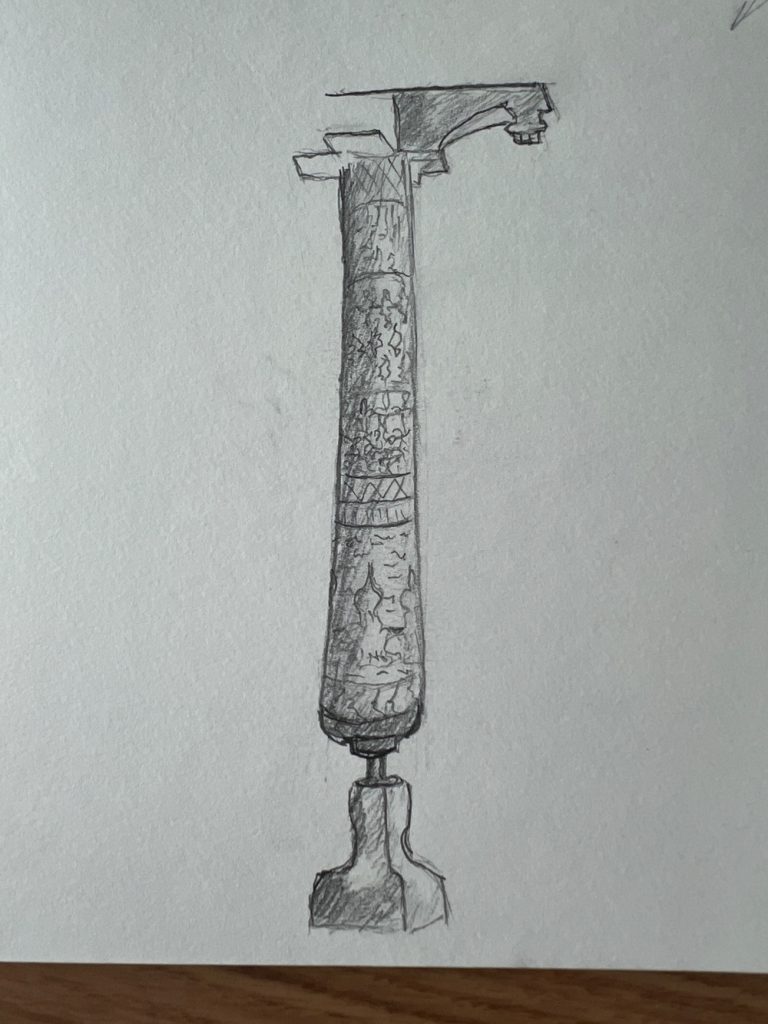
— Sketchbook — Lehmann’s tulip, wild poppies, wild iris (Iris sogdiana), saxaul and tamarisk. — A carved column — the architecture pulled me in alongside the plants.
Pomegranates – A Growing Personal Collection
Another thread that followed me through the whole journey was the pomegranate. It began when I bought my first three ceramic pomegranates in Uzbekistan. I did not plan to collect them — it simply happened through travel, memory and an emotional connection to place. Now I have seven ceramic pomegranates, from Uzbekistan, Georgia and Andalusia.
In Uzbekistan the pomegranate appears everywhere — in markets, textiles, ceramics and decorative patterns. It is more than a fruit. It is a cultural symbol of abundance, life, hospitality and continuity across generations. For me, each ceramic piece carries a memory of a place, a moment or a conversation. Together, they form a quiet visual diary of my journeys — and they have found their way into my own paintings of pomegranates ever since.
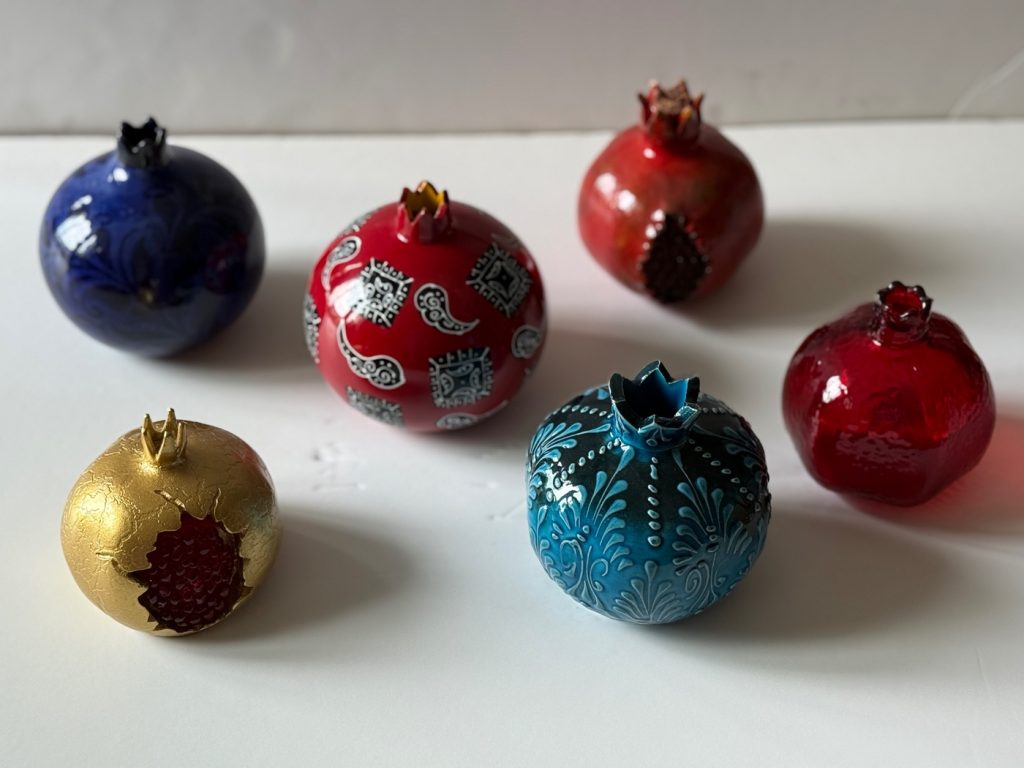
My small collection of ceramic pomegranates — gathered across Uzbekistan, Georgia and Andalusia.
What I Brought Back
I came to Uzbekistan thinking about plants, structure and natural form. I came back with sketchbooks filled with architectural studies, observations of Silk Road cities and new perspectives on composition and perspective — and with the memory of the Savitsky Museum in Nukus, where the work of the artists I mentioned is carefully preserved, artists whose voices were once ignored but are now protected and seen again.
The Savitsky Museum is unlike any other place I have visited. It is not only a museum — it is a cultural archive, a rescue of artistic history and a quiet act of resistance through preservation. It holds a rare sense of honesty about what art can be when it is free, vulnerable and protected at the same time.
And I still think about this journey often — especially in quiet studio moments in London, when everything settles and I begin to understand how deeply it has influenced my work. Not only in subject matter, but in how I now see structure, pattern and the relationship between nature and human creation.
ABOUT THE AUTHOR
Inessa Falina is a London-based botanical artist and teacher. A member of the Chelsea Physic Garden Florilegium Society, she has exhibited at The Mall Galleries and Chelsea Old Town Hall, with work held in private collections across Europe, the USA and Australia. Through her art and teaching, she helps people slow down, observe nature deeply and find calm through the practice of painting. You can follow her work on Instagram at @inessa.falina
— Inessa