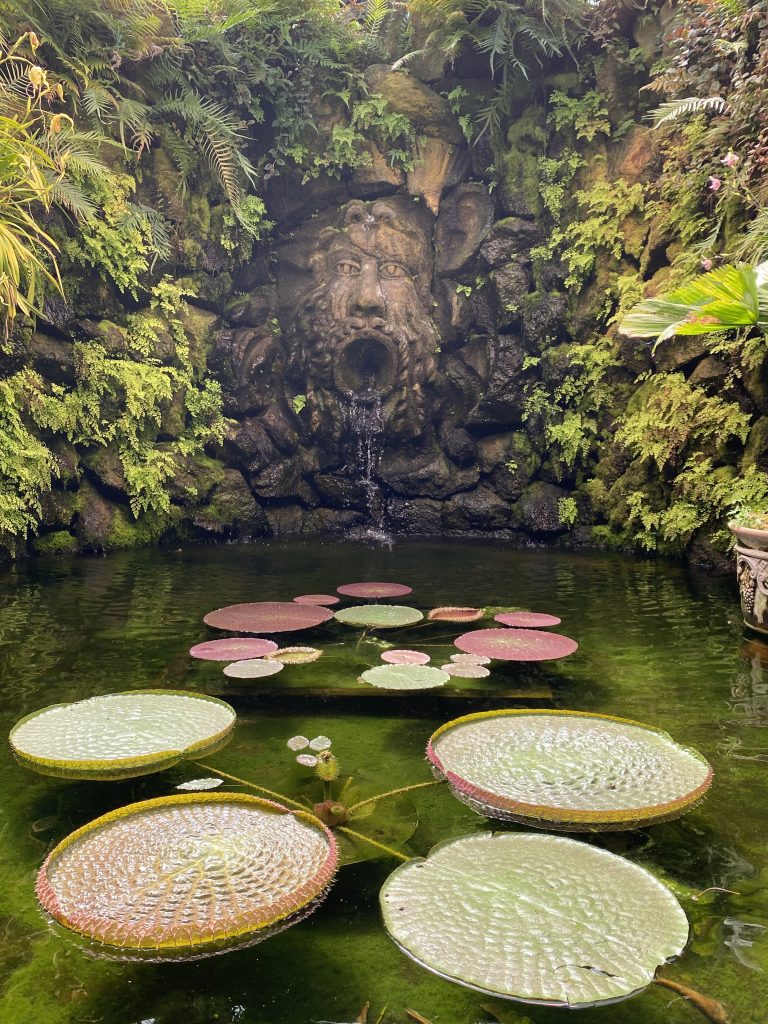
La Mortella Gardens
A personal story that began with two brushes, six colours and a very difficult season of life
Many people who have known me for a long time ask me a simple question: how I became a botanical artist?
From the outside, it looks like a clear path now — as though I always moved in this direction. But it was not planned. It was not even something I could have imagined at the beginning. It grew slowly from a very difficult time in my life, and from something that seemed almost too small to matter — the decision to pick up a brush.
A Hard Beginning
A few years ago, I lost two close family members in a very short time. It happened during the Covid period. There was no space to understand it properly. No rituals. No gatherings. Just silence, and the feeling of something enormous and unfinished.
Life suddenly felt very quiet and very heavy at the same time.
After some time, I went to see a doctor. I remember sitting there, trying to explain how I felt — and finding that I did not quite have the words. The doctor suggested antidepressant medication. I understood the suggestion. But I also felt a strong need to try something else first. Something simpler. Something that would bring me back into the physical world before I reached for anything else.
I did not want to stay only in my thoughts. I wanted to return to action. Even in a very small way.
The Decision to Work With My Hands
The decision I made was a quiet one. I would do something with my hands every day.
Not for results. Not for a career or a goal or anything I could show to anyone. Just to feel connected again — to the present moment, to my body, to something outside my own mind.
At that time, I did not call it an art practice. It was more like a personal rescue plan. Something steady to hold on to when everything else felt uncertain.
This is how painting slowly re-entered my life.
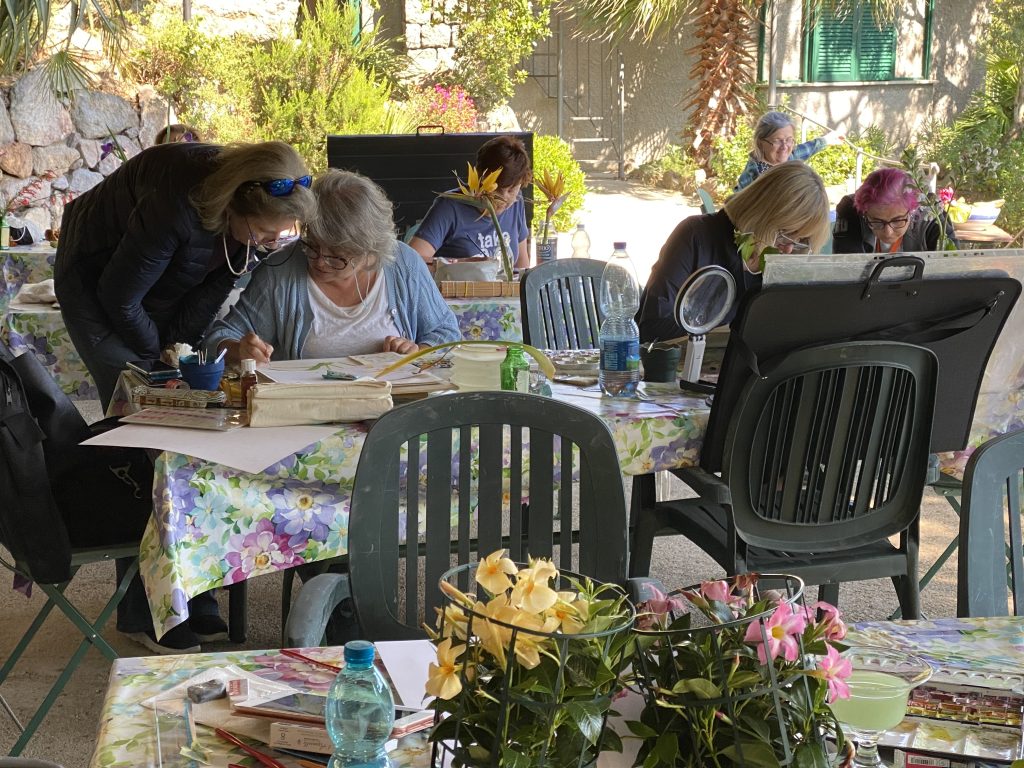
Painting in La Mortella Gardens
First Steps: La Mortella Botanical Gardens
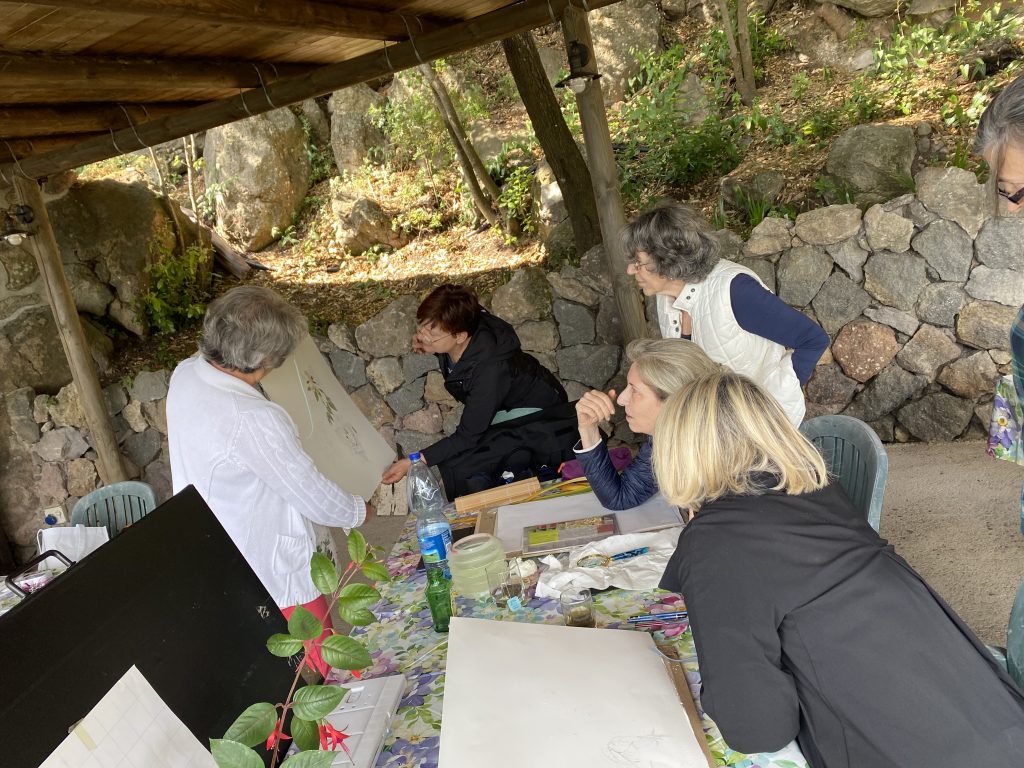
The real turning point came when I joined my first botanical painting course at La Mortella Botanical Gardens, in Ischia, Italy
The place felt like a different world. Founded by the composer William Walton and his wife Susana, La Mortella is one of the most carefully tended and beautiful gardens in Europe — lush, alive in every season, full of plants from across the world. There was a very special atmosphere there. Calm and unhurried. The people were kind and open. There was no pressure to be perfect. Only a gentle insistence on looking carefully at what was in front of you.
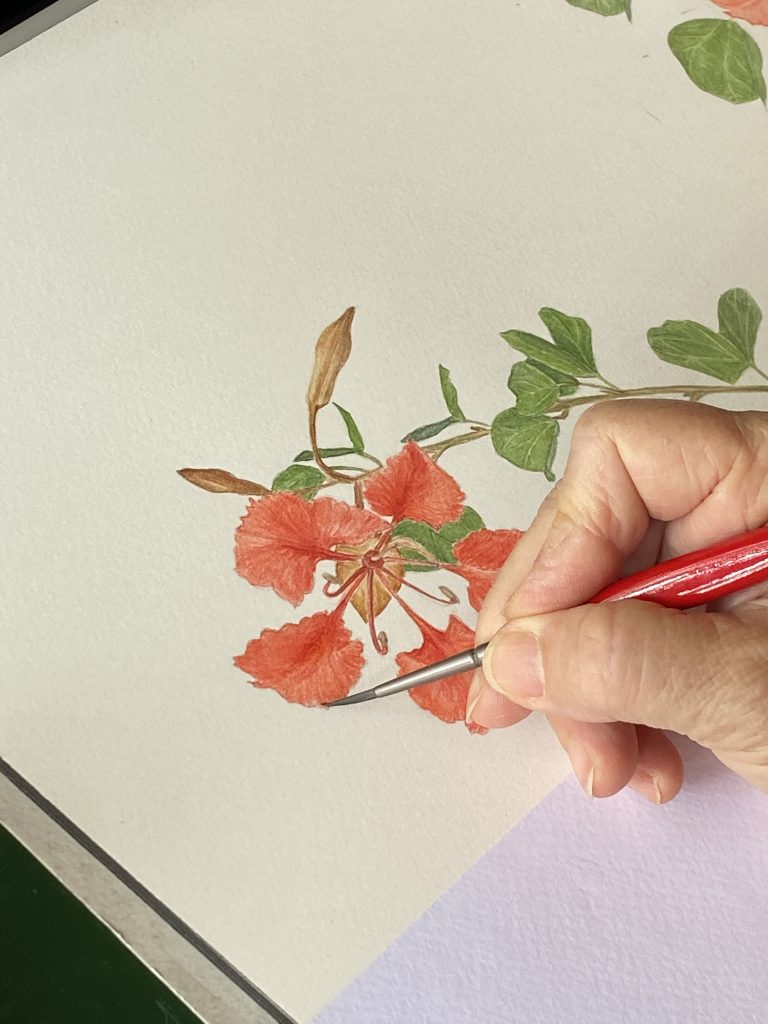
I arrived with just two brushes and six watercolours I had found in a local shop. That was all I had. No professional kit. Just a very simple beginning.
At first, I was not thinking about becoming a botanical artist. I was simply following instructions of my tutor Maria Rita Stirpe — learning how to observe a plant more carefully. Noticing the curve of a leaf. The softness of a petal. The way colour shifts in different light.
Slowly something changed.
While painting, I began to feel calm. Not excited. Not anxious. Just calm. And that feeling — quiet and steady — was new to me at that time. It was something I had not felt in months.
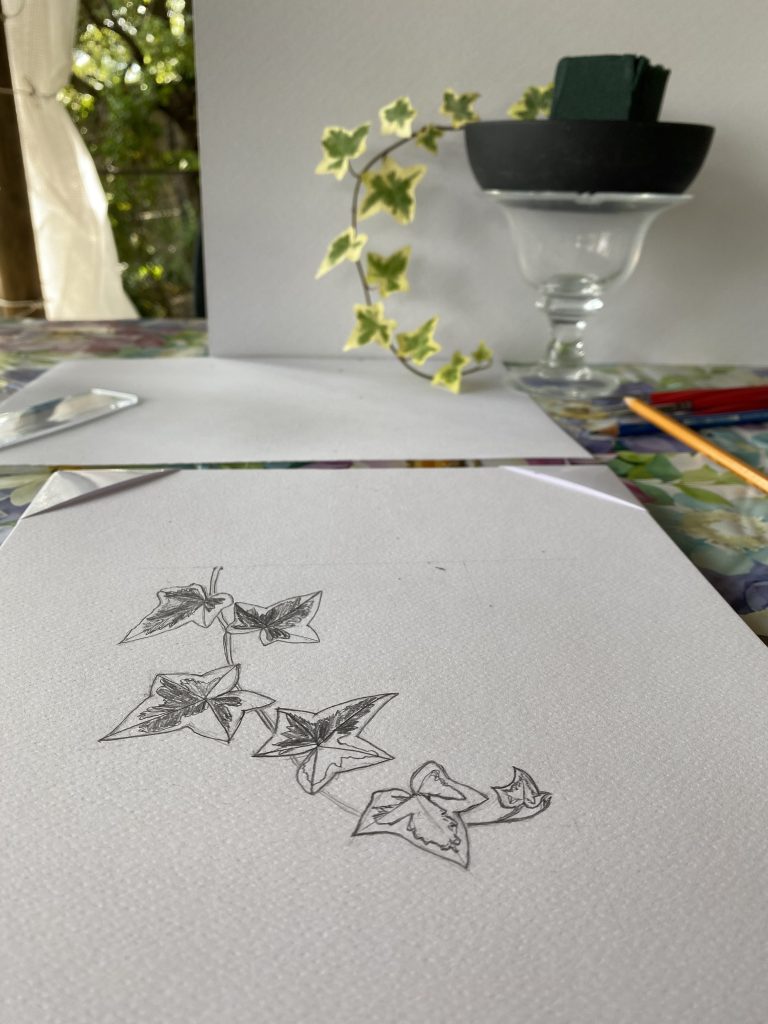
First steps in botanical drawing
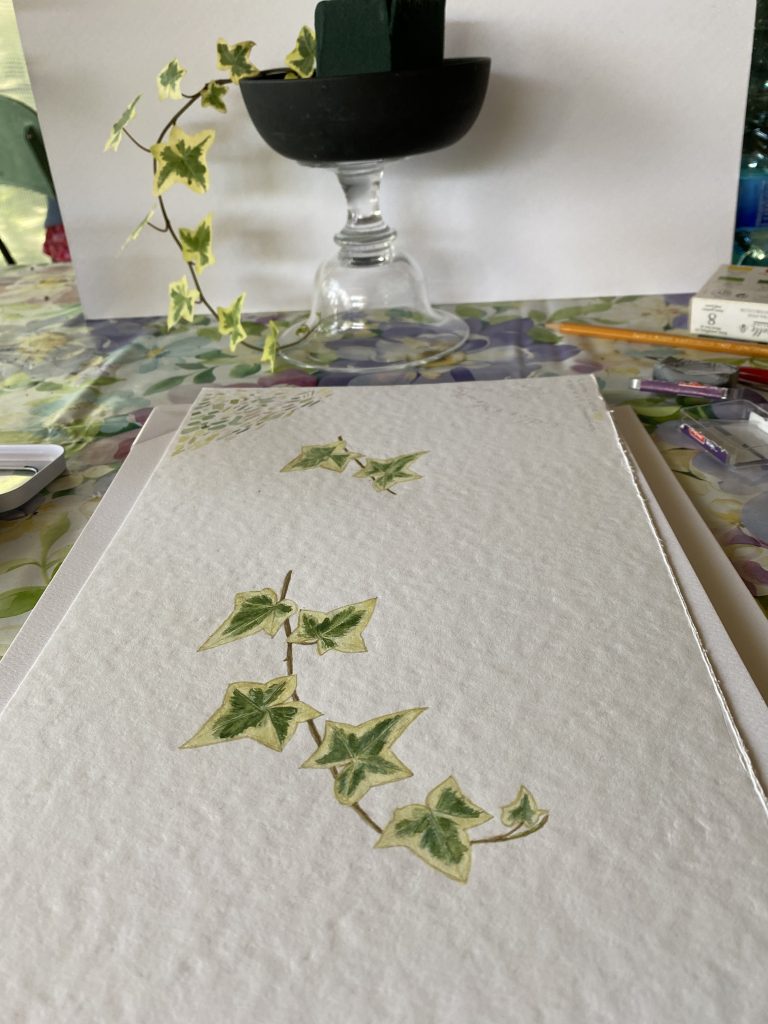
My first botanical painting
Learning to See Again
Botanical painting is not only about flowers or leaves. It is about learning to see.
At La Mortella, I began to notice things I would normally pass without attention. The edge of a leaf where light meets shadow. The way a stem holds its weight. The patience required to truly understand even one small part of a plant.
I started to slow down in a way I had almost forgotten.
This slowing down was not only about art. It was about recovery. It gave my mind a place to rest — something steady to return to, day after day. Something that asked nothing more of me than to be present.
I did not notice it immediately. But this was the first step back into myself.
A study process
A More Structured Path: Royal Botanic Garden Edinburgh
I liked what I felt during the course. Coming home, something in me wanted to continue. Not because I had a clear plan, but because I had found a direction that felt honest.
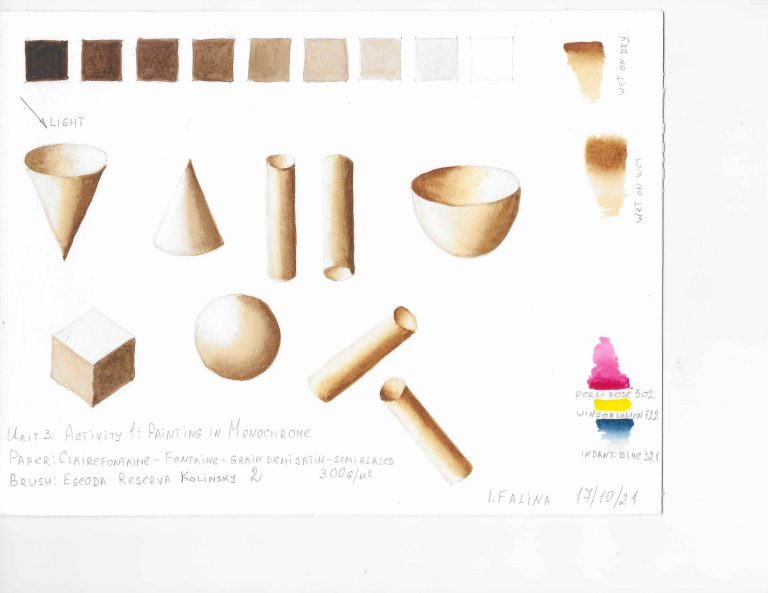
I decided to take a more structured step and enrolled in a six-month online programme with botanical artists associated with the Royal Botanic Garden Edinburgh. This was a different level of learning. More focused. More demanding. It required patience, discipline and a willingness to look far more carefully than I had before.
Each week brought new assignments, new plants to observe, new challenges in technique and perception. Each painting became a slow conversation between me and the plant. No rush. No noise. Just observation and response.
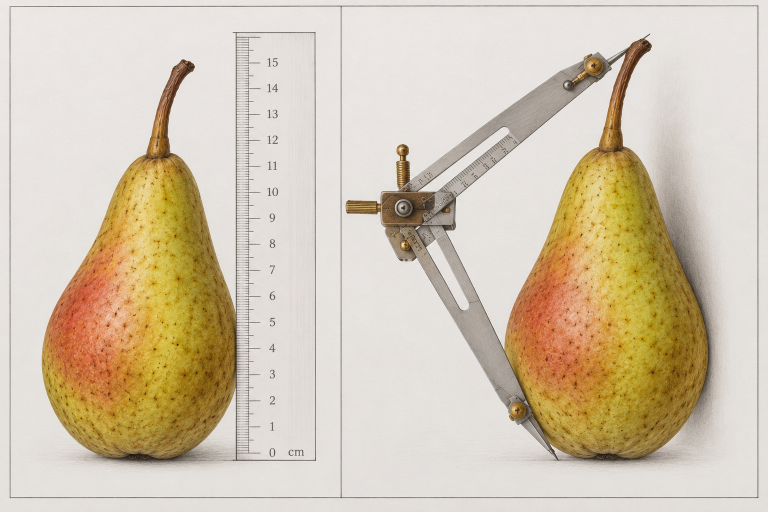
The programme asked me to measure. To understand structure. To return to a plant again and again until it began to feel familiar. There were moments of frustration, and many moments of quiet satisfaction. The kind that comes not from finishing something, but from finally seeing something you had been looking at for a long time.
At the end of the six months, I received my certificate with distinction. I did not expect that. I remember reading the result and feeling something quiet and clear — a small confirmation that the direction I had chosen was the right one.
A New Relationship With Time
During this period, something else changed. My relationship with time.
Before, time had always felt like something I was trying to manage or catch up with. During painting, it felt slower. More natural. I could sit for a long time simply looking at a leaf before beginning to paint it.
This would have seemed impossible before. Now it felt necessary.
One of the most important things botanical art gave me was this: it returned me to a slower rhythm of life. A rhythm I had not realised I had lost.
Around this time I started visiting London gardens more regularly. In one of my walks through Hyde Park, I met a gardener who had been working there for more than thirty years. He arrived each morning on an early bus at six o’clock, long before the park filled with people. We became friendly in the way you do with someone who shares a quiet kind of devotion to plants. He began leaving me things he thought I might like to paint — an unusual leaf, a branch, something he had noticed and set aside. Those small gestures meant more than he probably knew.
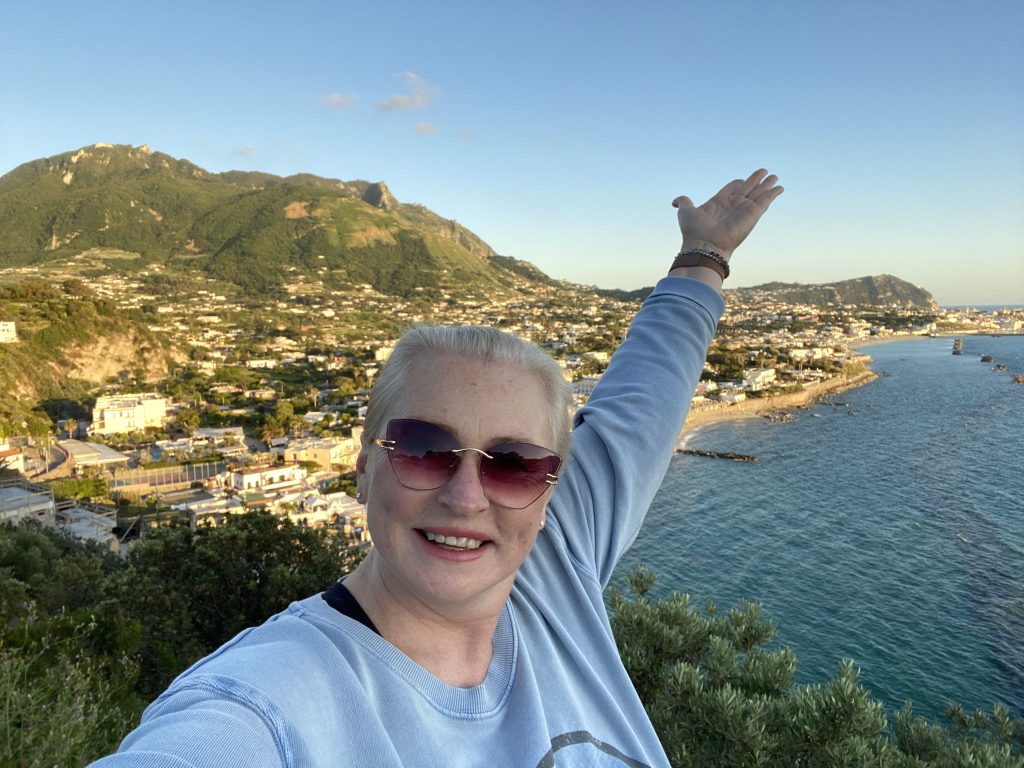
Leaving Ischia
Why I Kept Going
People sometimes think healing happens in a straight line. It does not.
For me, it was more like small steps that built on each other. Painting gave me something stable when everything else felt uncertain. It did not remove grief. But it gave grief a place where it could exist without taking over everything.
There were days when I painted and felt nothing particular. There were days when painting was the only thing that helped me move through the hours. But I kept returning — not because of a plan, but because it was the one thing that consistently made sense.
Some of the most ordinary sessions were the most important. Not the ones where a painting came together beautifully, but the ones where I simply sat down and began.
A Year With Simon Williams
In the second year, I made a longer commitment.
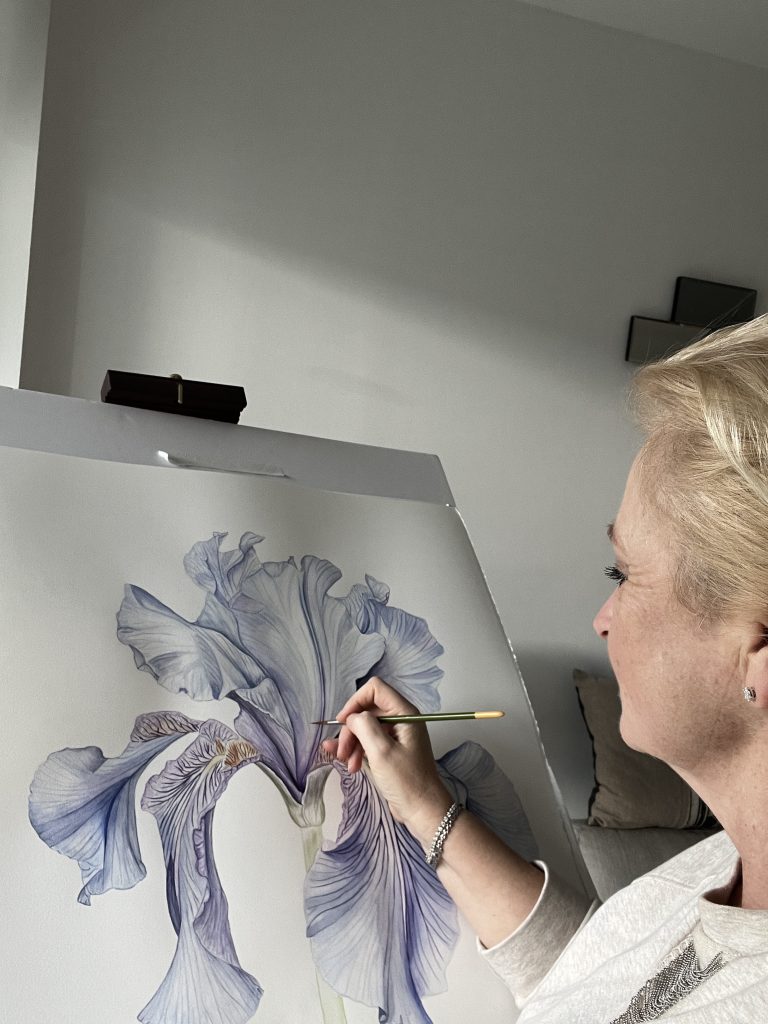
I enrolled in a full-year online programme with the botanical artist Simon Williams. A year is a very different thing from a short course. It asks something different of you. There is no rushing towards the end. You live inside the learning — week after week, plant after plant — and you begin to develop not just technique but habits. The habit of looking. Of returning. Of sitting with something until it reveals itself.
Simon Williams brought both rigour and warmth to the teaching. Demanding enough to keep me honest. Patient enough to let the work find its own pace.
By the end of that year, my brushwork had changed. My eye had changed. Something in my confidence — quiet, private, not yet something I could name out loud — had changed too. I could not yet call myself an artist. That word still felt too certain for where I was. But painting had become part of how I lived and how I saw the world.
That felt like enough.
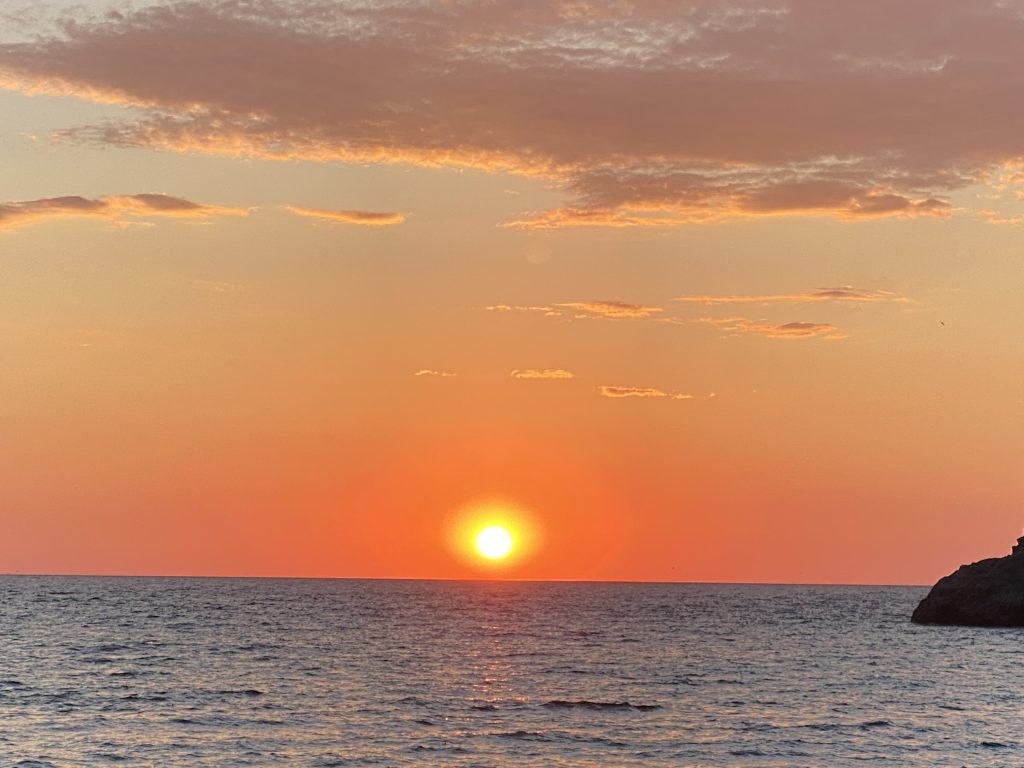
Beginning a new chapter in life
Something Was Beginning to Shift
After almost two years of painting — through grief, through a short course in Ischia and six months with the Edinburgh artists and a long year with Simon Williams — something began to change.
Not in the paintings themselves. In something harder to name.
In how I thought about my mornings. In what I reached for when the day felt uncertain. In small decisions I was making without quite noticing them.
I did not know yet where it was going. I could not have described it clearly at the time. But I could feel, for the first time, that my life was beginning to move in a new direction.
That part of the story belongs to the next post.
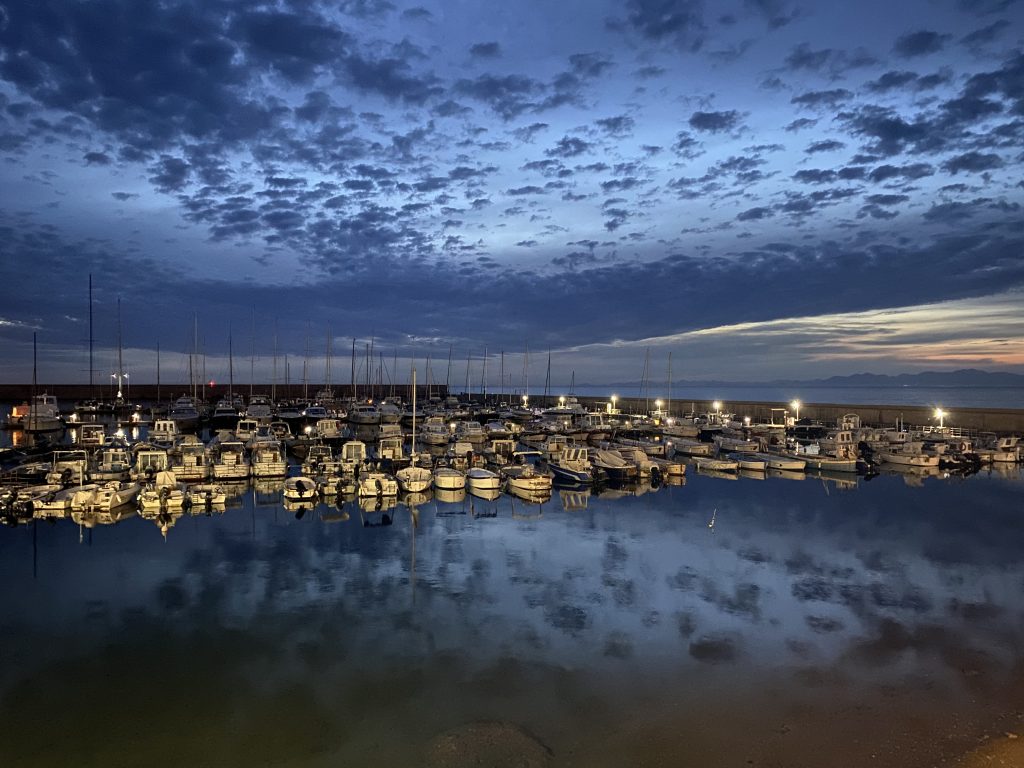
Ischia port
ABOUT THE AUTHOR
Inessa Falina is a London-based botanical artist and teacher. A fellow of the Linnean Society in London and member of the Chelsea Physic Garden Florilegium Society and Society Botanical Artists, she has exhibited at The Mall Galleries and Chelsea Old Town Hall, with work held in private collections across Europe, the USA and Australia. Through her art and teaching, she helps people slow down, observe nature deeply and find calm through the practice of painting. You can follow her work on Instagram at @inessa.falina
— Inessa
3 Comments