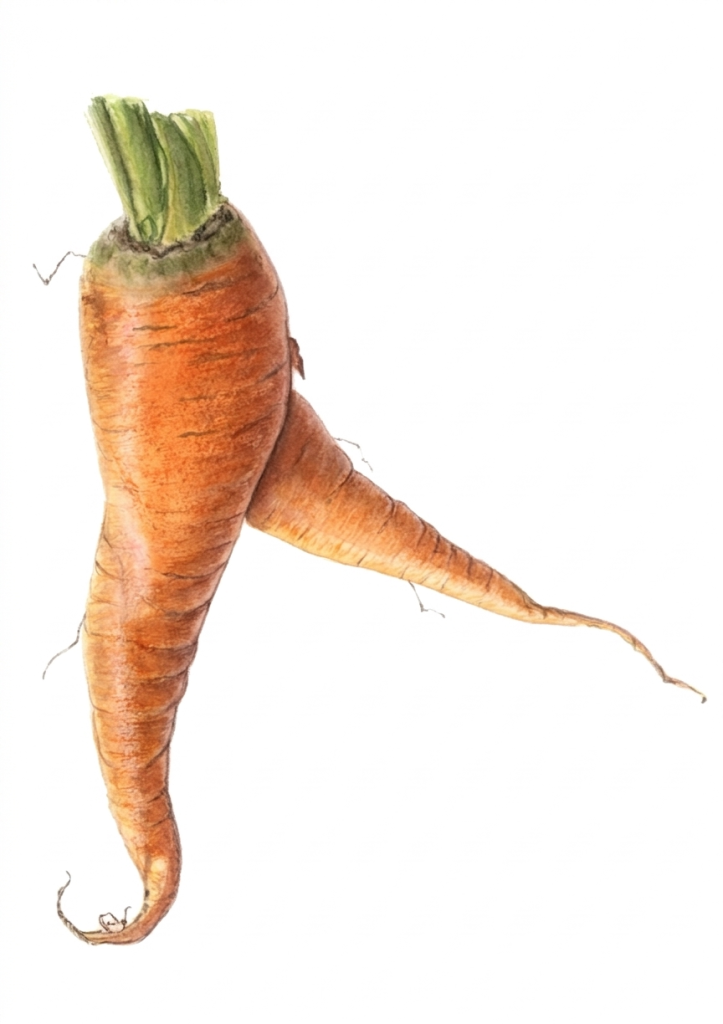
Skating carrot
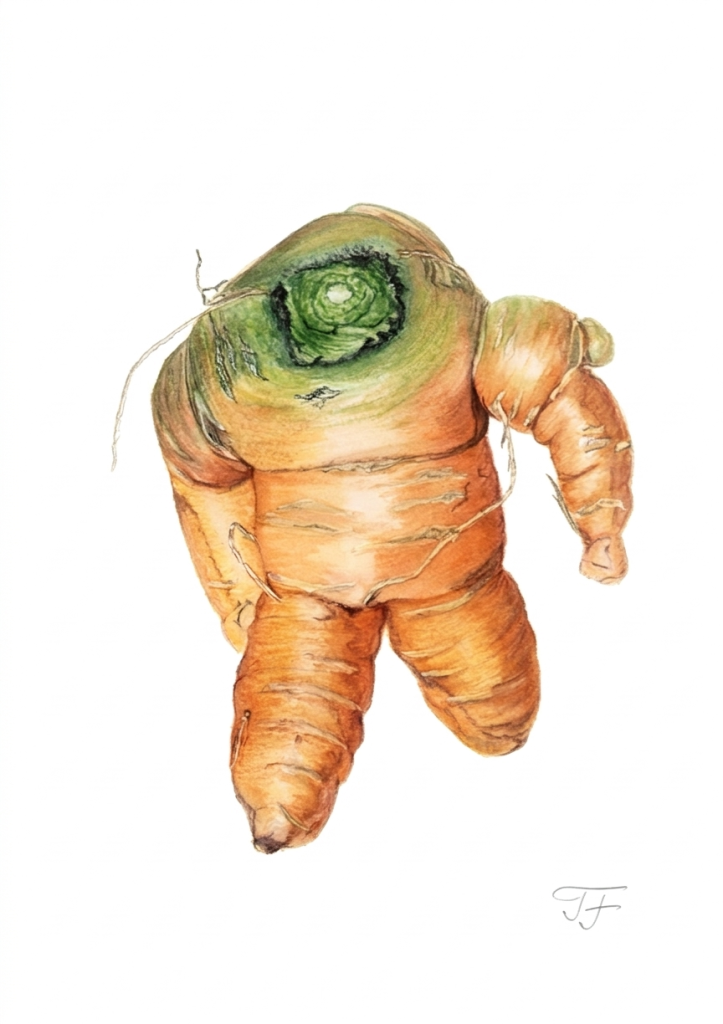
Power root – Rikishi
For centuries botanical art has been a serious business. Artists have carefully observed plants, studied every tiny detail and captured the beauty of nature with incredible precision. Every vein, every petal, every texture has its place. And rightly so. Contemporary botanical art carries an extraordinary tradition — one that requires patience, discipline and a kind of devotion that most other art forms simply do not ask of you.
But at some point, I started asking myself a question. Does botanical art always have to be serious? Could a banana have a personality? Could carrots have ambitions? Could pomegranates create a little drama?
The answer, as I discovered, was yes. This is the story of how my collection The Playful Botanical was born.
I originally called this series my “Funny Fruit and Vegetable Collection.” But as the collection developed, I realised that “funny” did not fully describe what I was trying to create. These paintings are not simply about making people laugh. They are about looking at familiar things differently — about discovering character in nature and allowing fruit and vegetables to tell their own stories. Because perhaps we have underestimated them.
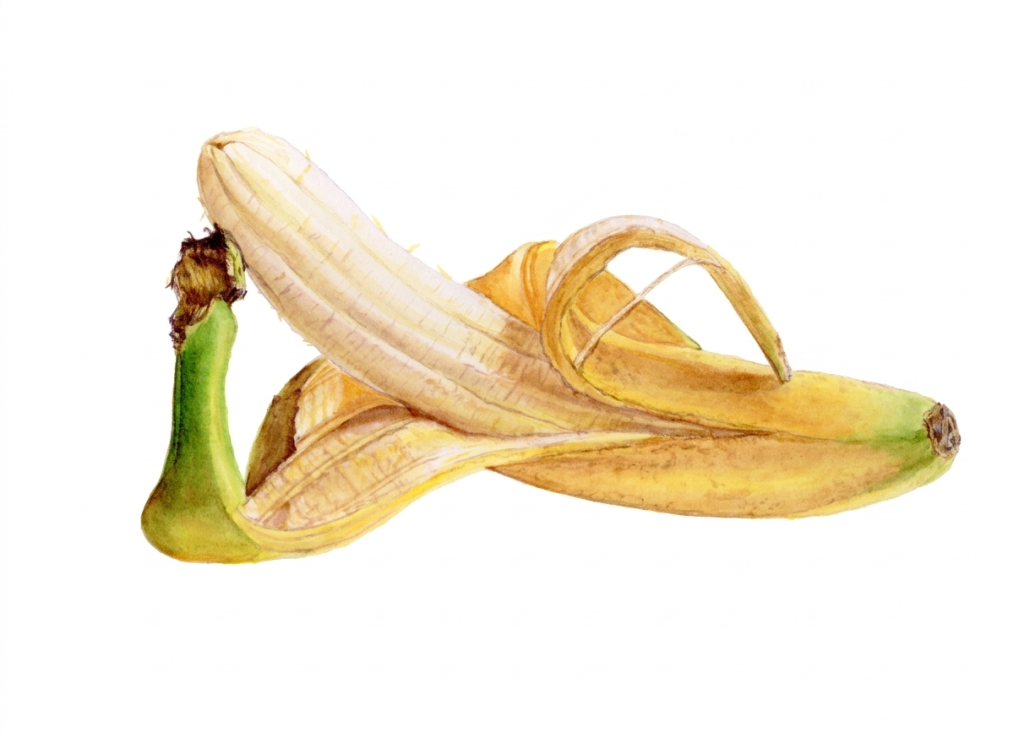
Posing banana
The Banana That Started It All
Everything began with a banana.
I painted Posing Banana for a non-botanical exhibition. My intention was not to create a humorous painting just for entertainment. I wanted to prove that botanical art could belong anywhere. Why should botanical paintings only appear in botanical exhibitions? Why could a fruit not stand proudly next to contemporary artworks?
When I painted Posing Banana, I imagined a confident character who knew exactly how attractive it was. A banana with confidence. A banana that had decided it was ready for the spotlight. And people noticed.
The painting received a wonderful response and even caught the attention of Saatchi Art who featured it in their promotion. When I first received that email, I thought it was spam. I mean, how often does a banana receive international recognition? But it was real. And that banana opened a completely unexpected door — one that made me understand that this kind of playful botanical art had its own audience, its own logic and its own way of connecting with people.
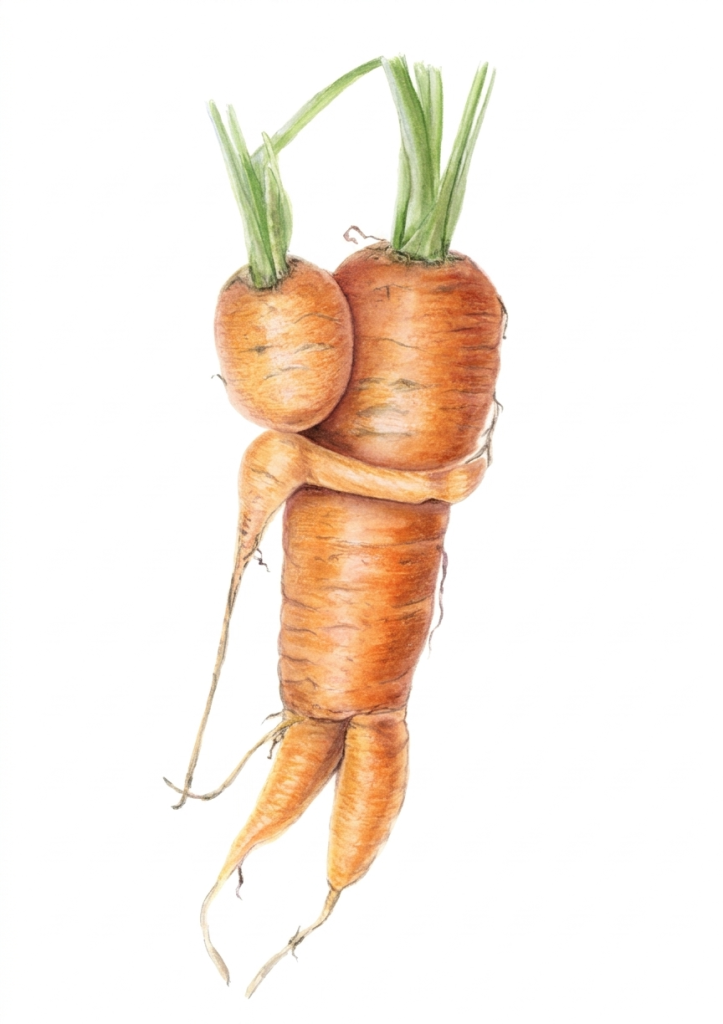
Hug
Tango
Carrots That Discovered Their Personalities
After the success of Posing Banana, I decided to continue exploring the playful side of botanical painting.
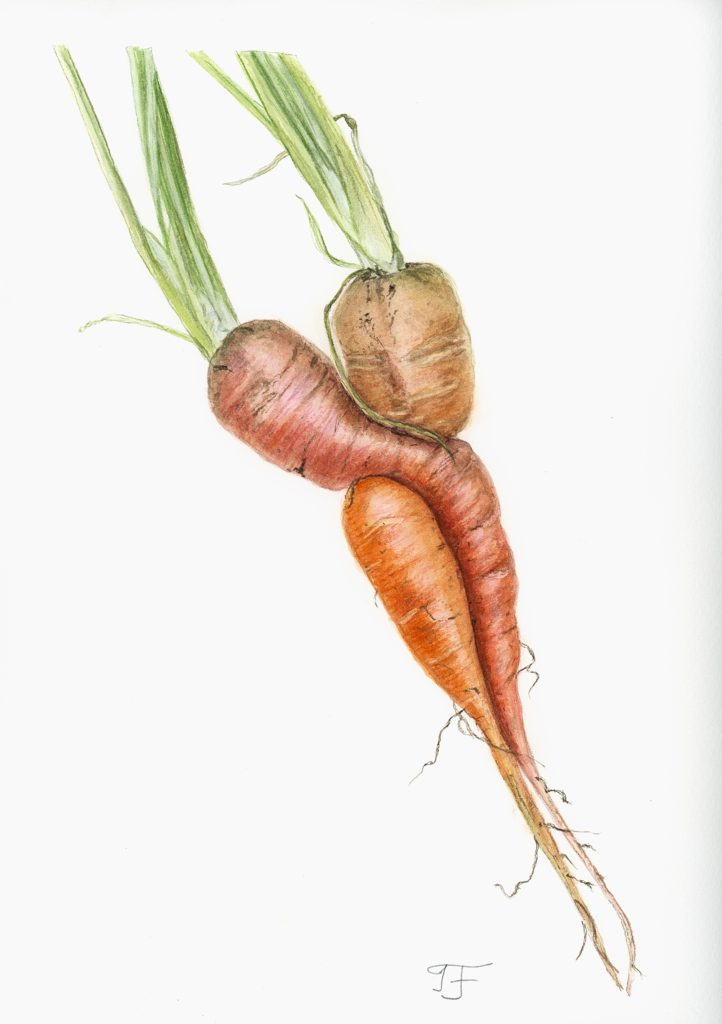
The next characters were carrots. I created four paintings: Skating Carrot, Power Root- Rikishi, Hug and Tango Carrots. While painting them I started noticing something fascinating. People did not just look at the paintings and admire the technique. They immediately created stories around them. They saw personalities. The skating carrot became adventurous and full of energy. The powerful root became strong and determined. The hugging carrots represented parentship and connection. The tango carrots brought movement, romance and a little theatrical drama.
Watching people react to these paintings was one of the most enjoyable parts of creating the collection. They smiled, they laughed and they stopped for a moment — which is perhaps the best thing any painting can do. And maybe that is something we all need more of.
When Pomegranates Became Dramatic
The next chapter of The Playful Botanical began with pomegranates. I have always been fascinated by this fruit. It is beautiful, mysterious and full of symbolism. After my travels to Uzbekistan, where pomegranates carry such deep cultural meaning, I wanted to explore this fruit in a new way.
The result was a series including Juicy Scandal, Juice and the City and A Moment of Juiciness. And yes, there was a little drama.
I finished painting Juicy Scandal one evening. The following day, I received a message from someone who wanted to buy it. The interesting part was that they had only seen the artwork on my phone. They had not visited my studio, they had not seen the original painting and they had not spent time looking at every detail. They simply connected with it. The collector told me that the painting resonated with their personality — and this is one of the most beautiful things about art. Sometimes an artwork finds the person who needs it.
The next day, I received another message from a collector who had already purchased The Elegance of Openness. They said they would also like to buy Juicy Scandal. For a moment I thought I might need to organise an auction. A pomegranate auction. I have to admit that was not something I expected when I started painting fruit.
A Different Side of Botanical Art
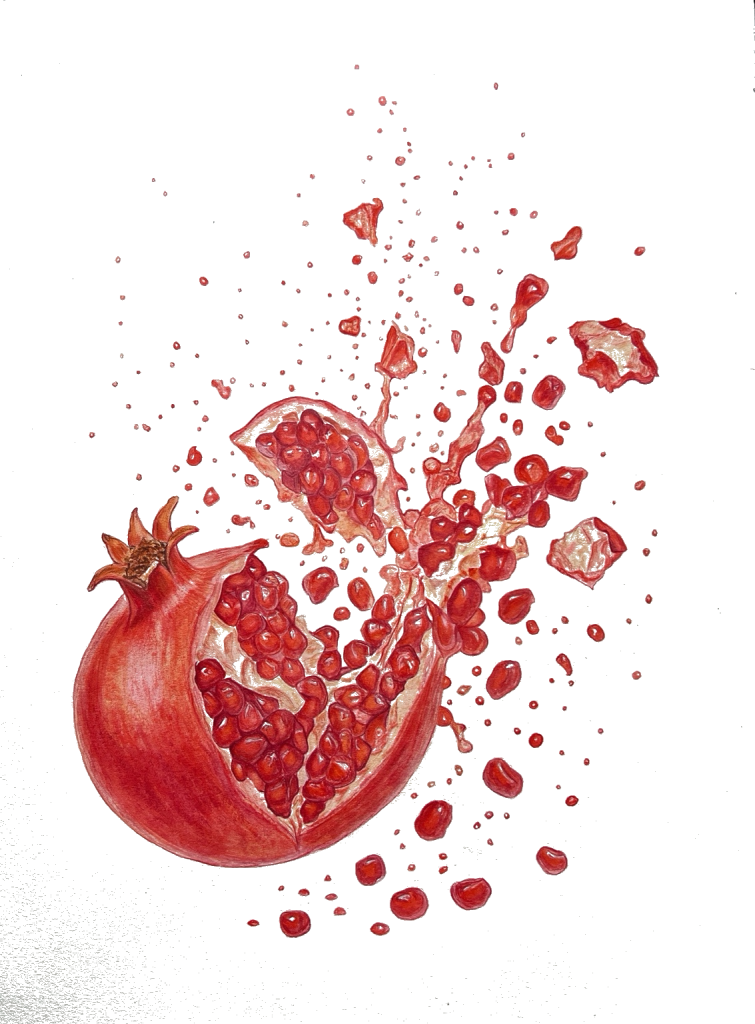
Juicy Scandal by Inessa Falina
Botanical painting is one of the oldest art forms. It requires patience, discipline and incredible observation. But tradition does not mean that artists cannot have fun. What stops us from seeing the playful side of nature? What stops a botanical painting from making someone smile?
Some people have called my work contemporary botanical art with a humorous twist. I like that. Because botanical art is not frozen in the past — it can continue to grow, change and surprise us, just as plants do. The Playful Botanical is my way of showing that nature has personality. A fruit can be elegant. A vegetable can be funny. A botanical painting can be precise and still have a sense of humour.
The Best Feedback Comes From People
The most rewarding part of this collection has been seeing people’s reactions. At exhibitions, visitors often approach my paintings expecting traditional botanical art. Then they discover a banana with confidence, carrots dancing together and pomegranates creating their own little stories.
Some of the comments have made me laugh. One person wrote: “I did not know I could have style envy from a banana but here we are…” And honestly, I think that says everything.
Art does not always need to be serious. Sometimes it just needs to make us stop, smile and see the world from a slightly different angle. Life is already serious enough — we need moments of joy, curiosity and playfulness.
And if a banana can help with that, who am I to stand in its way?
ABOUT THE AUTHOR
Inessa Falina is a London-based botanical artist and teacher. A fellow of the Linnean Society in London and member of the Chelsea Physic Garden Florilegium Society and Society Botanical Artists, she has exhibited at The Mall Galleries and Chelsea Old Town Hall, with work held in private collections across Europe, the USA and Australia. Through her art and teaching, she helps people slow down, observe nature deeply and find calm through the practice of painting. You can follow her work on Instagram at @inessa.falina
— Inessa