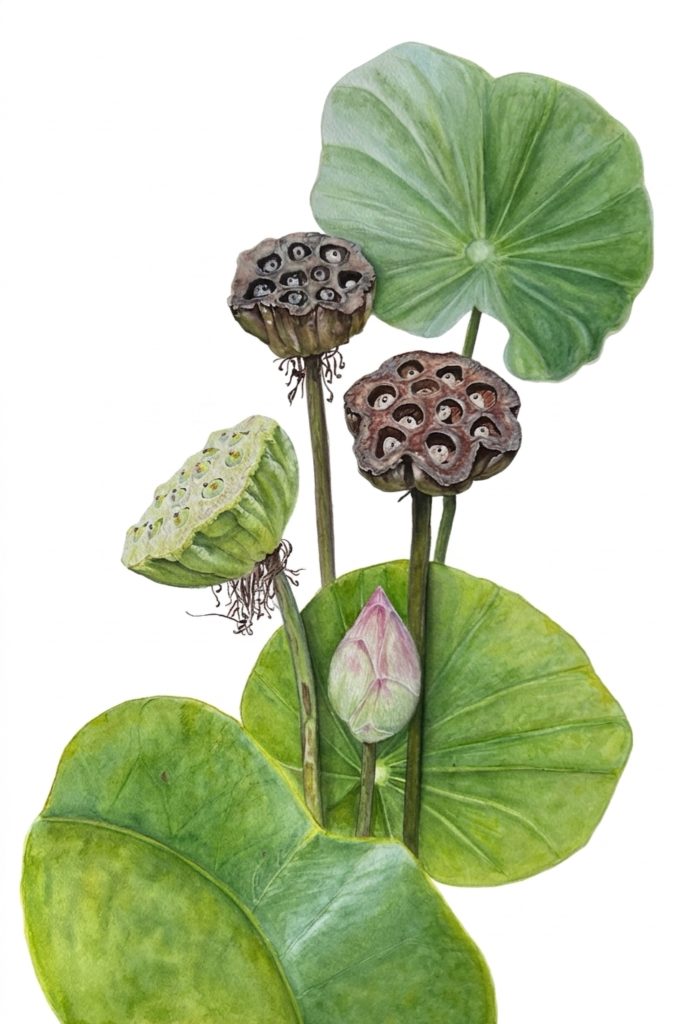
The Nature’s Meditation – Lotus, original painting by Inessa Falina
Some paintings begin with an idea. Others begin with a feeling.
This lotus painting began with curiosity.
When I first stood in front of the plant, I expected the flower to be the main attraction. After all, lotus flowers have inspired artists for centuries. Their graceful shape, soft colours and peaceful presence naturally draw the eye. I thought I already knew what I wanted to paint.
But nature has a wonderful habit of changing our plans.
When the leaves became the story
The longer I observed the plant, the more I realised that the flower was only one part of a much bigger story. Around it were large heart-shaped leaves, each one different. Some reached proudly towards the light. Others gently curved over the water. Every leaf seemed to have its own character and its own purpose. Together they created a quiet balance that made the flower even more beautiful.
Then my attention was drawn to something many people might easily overlook.
The dry lotus seed pods.
They were no longer fresh or colourful. Their season had already passed. Yet they had an extraordinary beauty of their own. Their sculptural forms stood confidently beside the fresh leaves and elegant flower, telling another chapter in the life of the plant.
And that contrast stayed with me.
Here was a single plant showing youth and maturity, freshness and age, beginning and completion all at once. Nothing looked out of place. Every stage belonged together.
I knew I wanted this painting to capture that feeling.
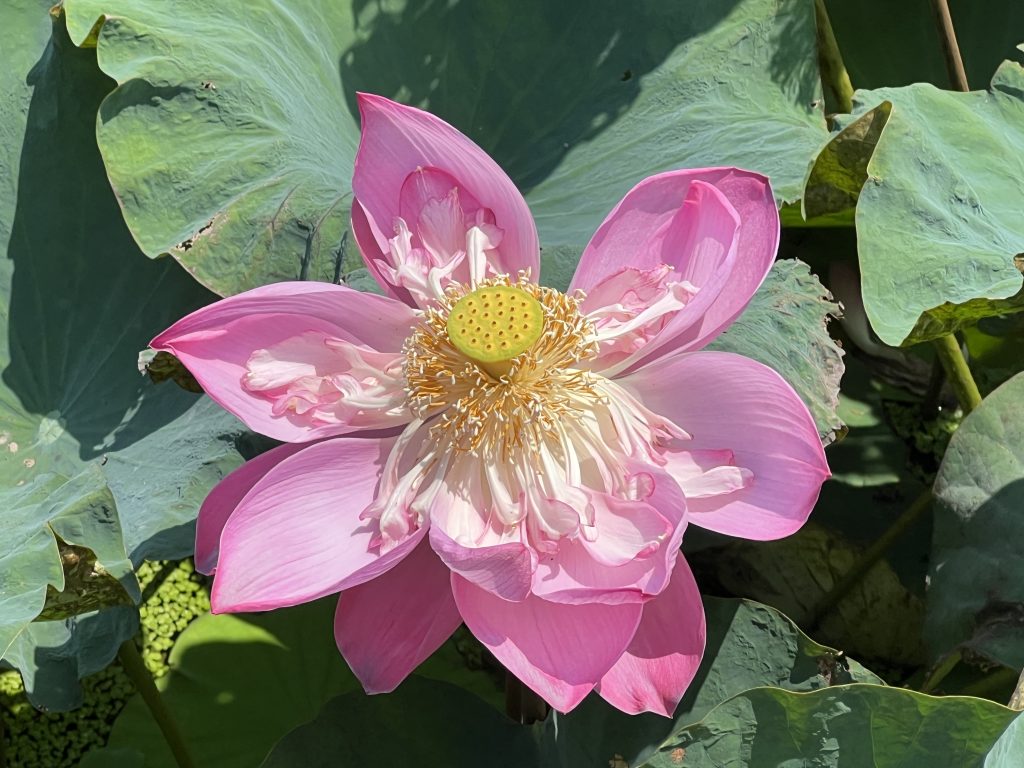
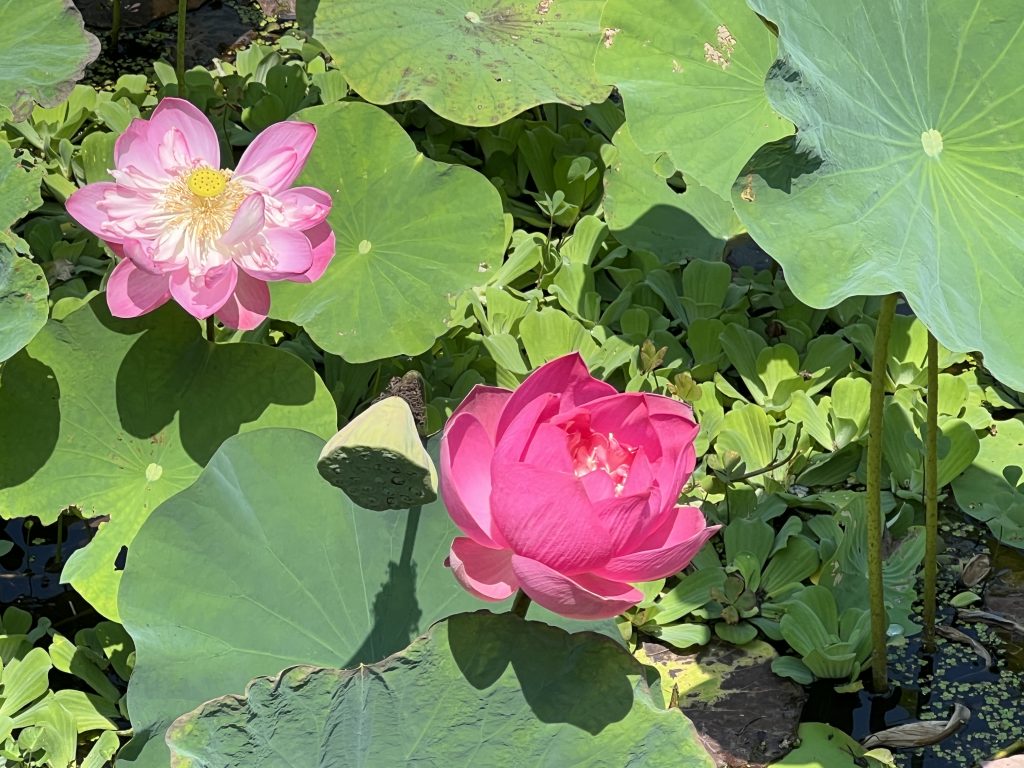
Lotus flowers from The Nature Samui
Botanical painting as a conversation with nature
As a botanical artist, I spend much more time looking than painting. Before I pick up my brush, I study the plant carefully. I look at the way the light moves across a leaf, the tiny changes in colour, the delicate veins and the way each stem grows naturally from another. I make sketches, take notes and return to the subject again and again.
Many people imagine botanical painting is simply copying what we see.
For me, it is much more than that.
It is a conversation with nature.
The longer I observe a plant, the more it begins to reveal its own personality. Every species has its own rhythm. Some feel energetic. Others seem delicate or playful. The lotus feels calm. It never appears to rush. It simply exists with quiet confidence.
Perhaps that is why so many cultures admire it.
The lotus grows from muddy water, yet its flowers rise clean above the surface. It has become a symbol of resilience, renewal and hope. While I was painting, I found myself thinking less about symbolism and more about what I could actually see in front of me. Still, it is impossible to ignore the feeling the plant creates.
It invites you to slow down.
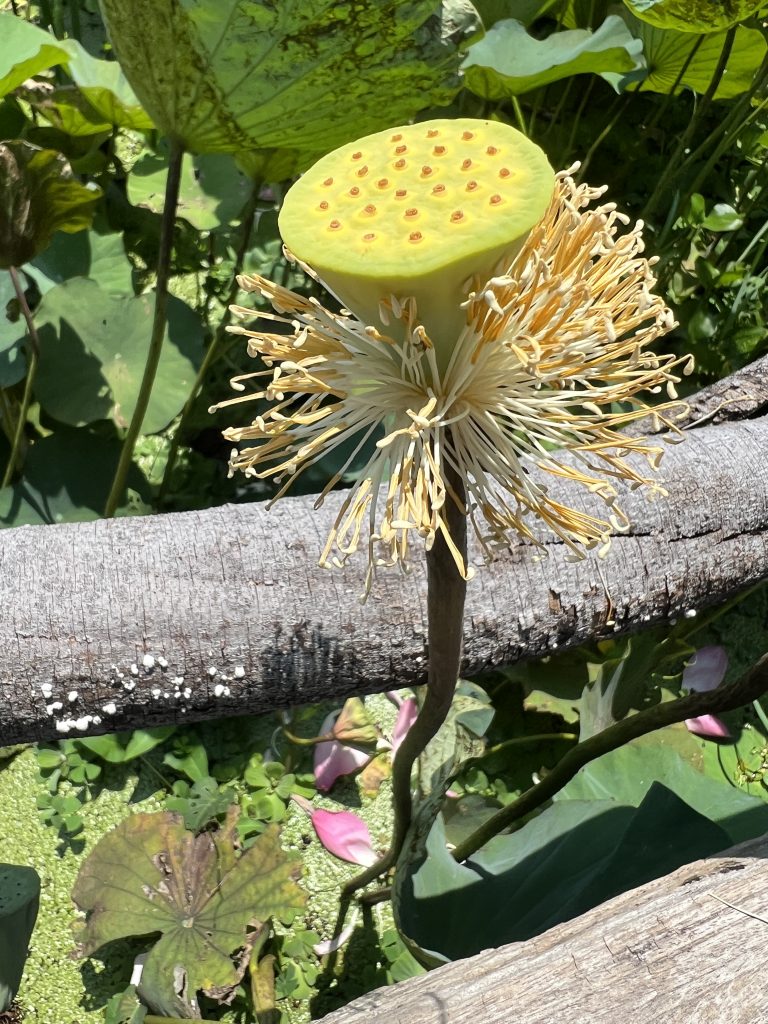
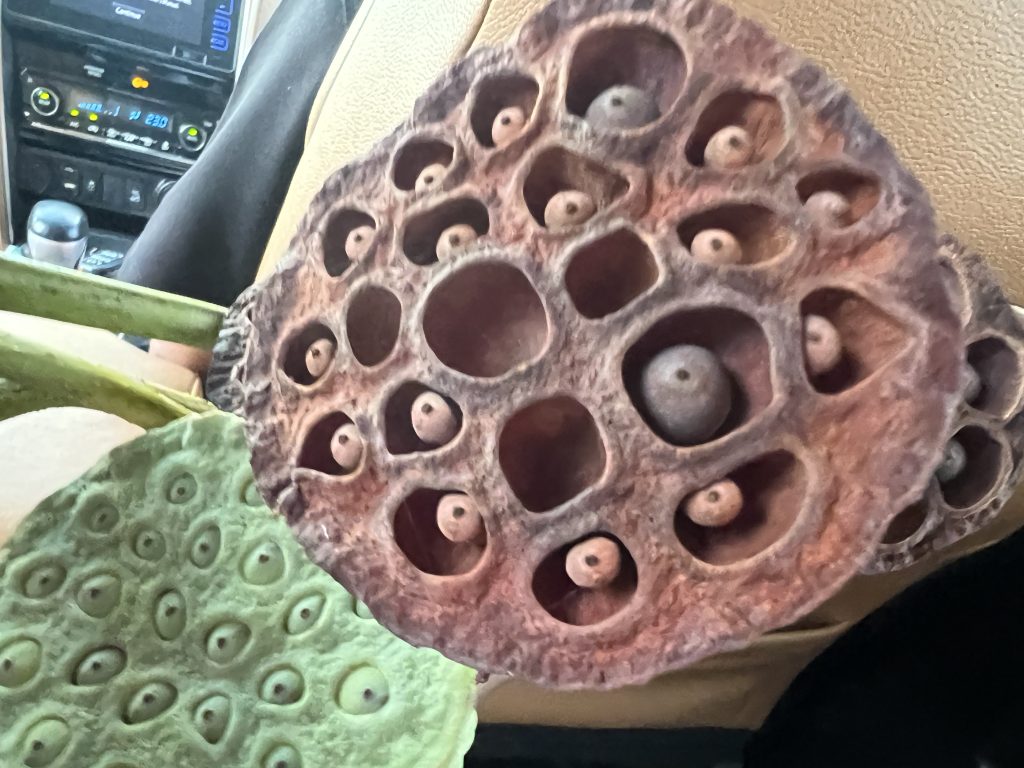
Lotus pods – my future models
Why the lotus invites you to slow down
That slowing down is something I value deeply.
Like many people, I have experienced periods of loss and change. Art became one of the ways I found my way forward. When life feels uncertain, painting asks only one thing of me: to focus on the next brushstroke.
Nothing more.
Hour after hour, the outside world becomes quieter. My attention moves from worries and endless thoughts to colour, shape, light and texture. There is something incredibly comforting about giving complete attention to a single leaf.
Perhaps that sounds unusual.
But I believe many of us have forgotten how restorative careful observation can be.
We are surrounded by constant movement, endless notifications and pressure to do more. Nature works differently. A leaf unfolds when it is ready. A flower opens in its own time. Nothing is hurried.
When I paint plants, I feel I am borrowing that rhythm.
I hope that feeling remains inside the finished artwork.
When someone hangs one of my paintings in their home, I hope they receive more than a botanical illustration. I hope they receive a small reminder to pause. Even if only for a few seconds while walking through the room.
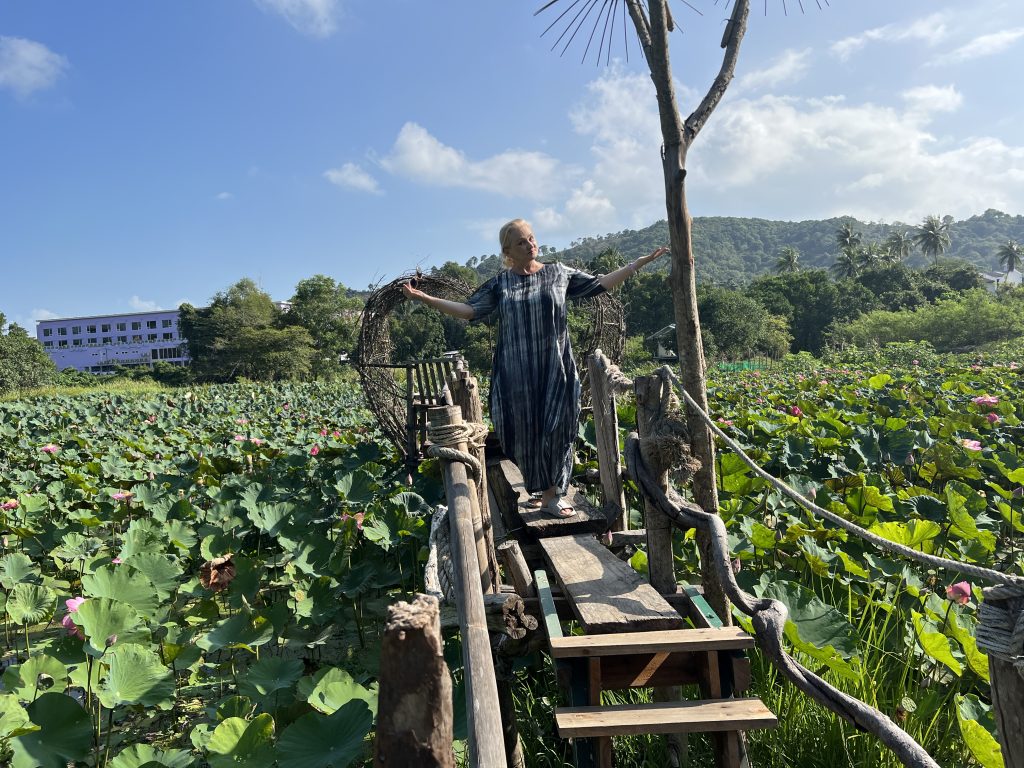
At the lotus plantation in Koh Samui
What watercolour holds that a photograph cannot
Collectors often tell me they notice new details every time they look at an original painting.
That is one of the wonderful qualities of watercolour.
Unlike a photograph, which captures a single instant, watercolour is built slowly through many transparent layers. Every wash of colour influences the next. Tiny adjustments happen throughout the painting. Some areas contain only a few layers, while others may contain dozens. The finished work has a depth that quietly reveals itself over time.
The closer you look, the more you discover.
Every original painting also carries something impossible to reproduce completely.
It carries time.
Not time measured by a clock, but time measured by attention.
Every brushstroke represents a decision. Every colour has been carefully mixed. Every shadow has been observed rather than invented. Long before the painting reaches its frame, many hours have already been spent simply understanding the subject.
That invisible investment becomes part of the artwork itself.
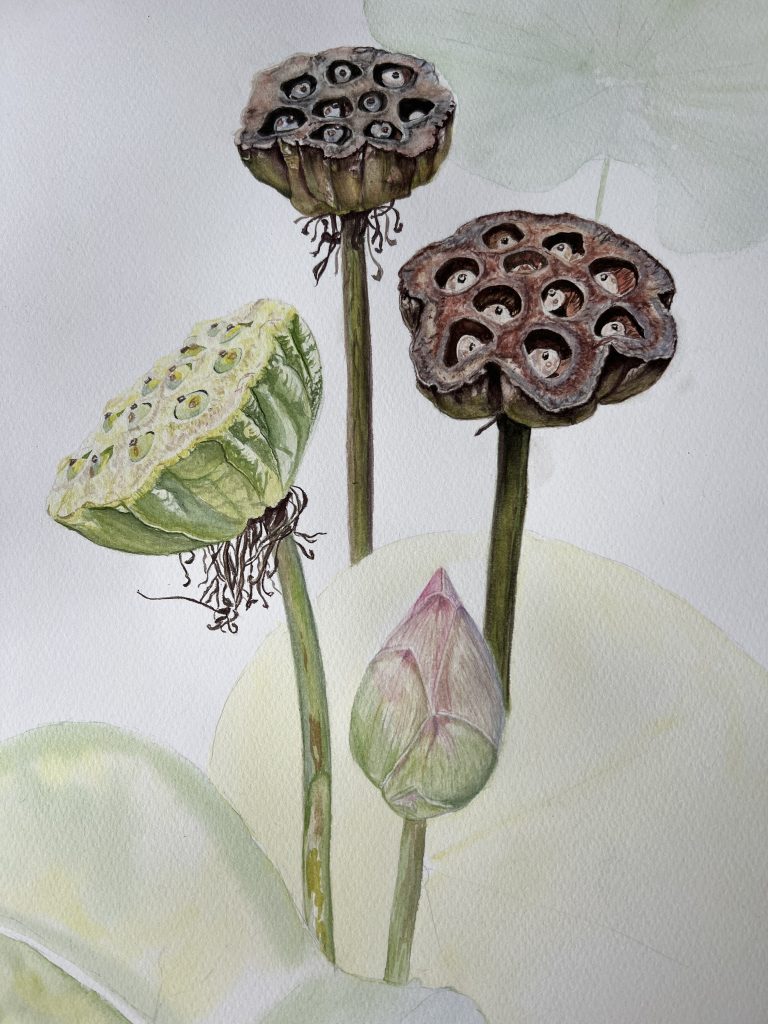
Painting Lotus
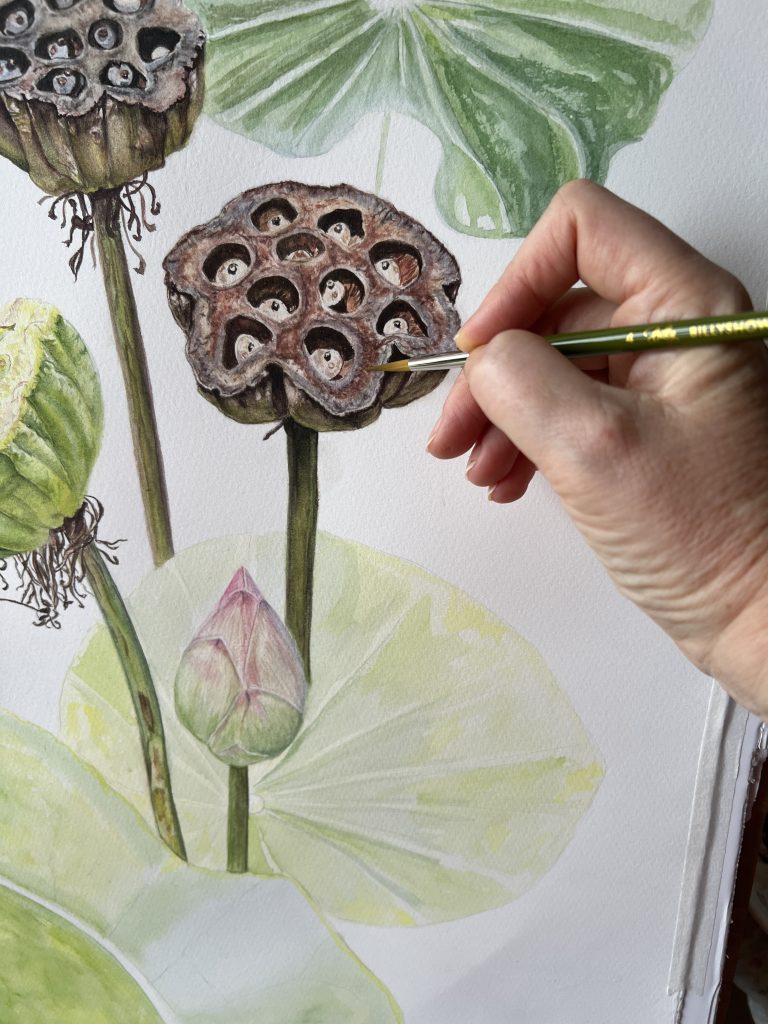
The journey of an original painting
I often think about the journey each painting takes.
It begins as a living plant growing quietly somewhere in the world.
Then it catches my attention.
For weeks, sometimes months, I study it, sketch it and slowly bring it to life on paper. Eventually the painting leaves my studio and begins an entirely different life in someone else’s home.
I love imagining that journey.
Perhaps it will hang in a peaceful reading room.
Perhaps it will become part of a growing art collection.
Perhaps someone will walk past it every morning with a cup of coffee and notice a different detail each day.
Art has a remarkable ability to become part of our everyday lives without demanding attention. It quietly shapes the atmosphere of a room.
That is especially true of botanical art.
Plants have always brought comfort into our homes. Even when we cannot spend as much time outdoors as we would like, images of nature continue to create a sense of peace. Scientific research has shown that simply looking at natural forms can help us feel calmer and more relaxed. While a painting cannot replace a walk through a garden, it can gently remind us of the beauty that exists beyond our busy schedules.
The lotus does this particularly well.
Its graceful curves, balanced composition and gentle colours create a feeling of stillness without being empty. There is life in every leaf, every stem and every seed pod. Together they tell the complete story of the plant rather than showing only its most perfect moment.
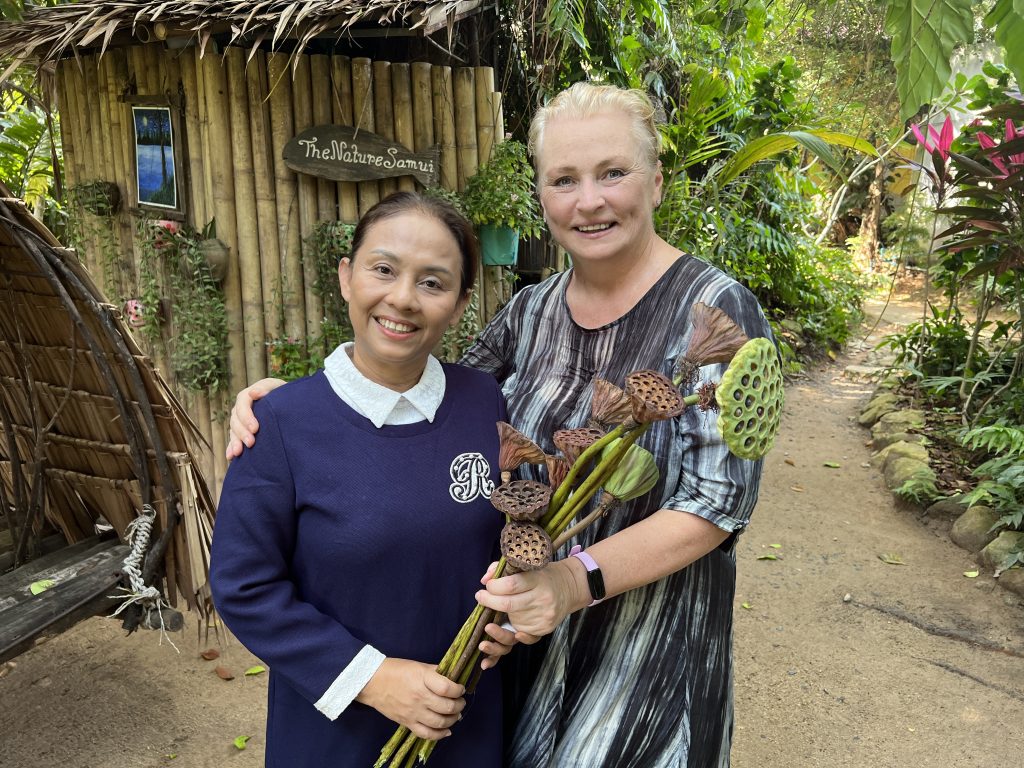
My present from Baan Patcharintorn, the owner of the Nature Samui
Beauty in every stage
That honesty matters to me.
Nature is beautiful not because everything is flawless, but because everything belongs.
The fresh leaves belong.
The flower belongs.
The ageing seed pods belong too.
Nothing is hidden.
Perhaps that is one reason I enjoyed painting this subject so much. It quietly reminded me that beauty exists in every stage of life.
As an artist, I have painted many different botanical subjects over the years. Every plant has taught me something new about observation, patience and colour. Yet a few subjects stay in my memory long after the painting is finished.
This lotus is one of them.
Even now, when I look at the completed artwork, I remember the peaceful hours spent studying every detail. I remember discovering that the leaves deserved as much attention as the flower. I remember noticing the quiet dignity of the dried seed pods and realising they completed the story.
Those moments became part of the painting.
Although the artwork now stands on its own, I hope some of that experience travels with it.
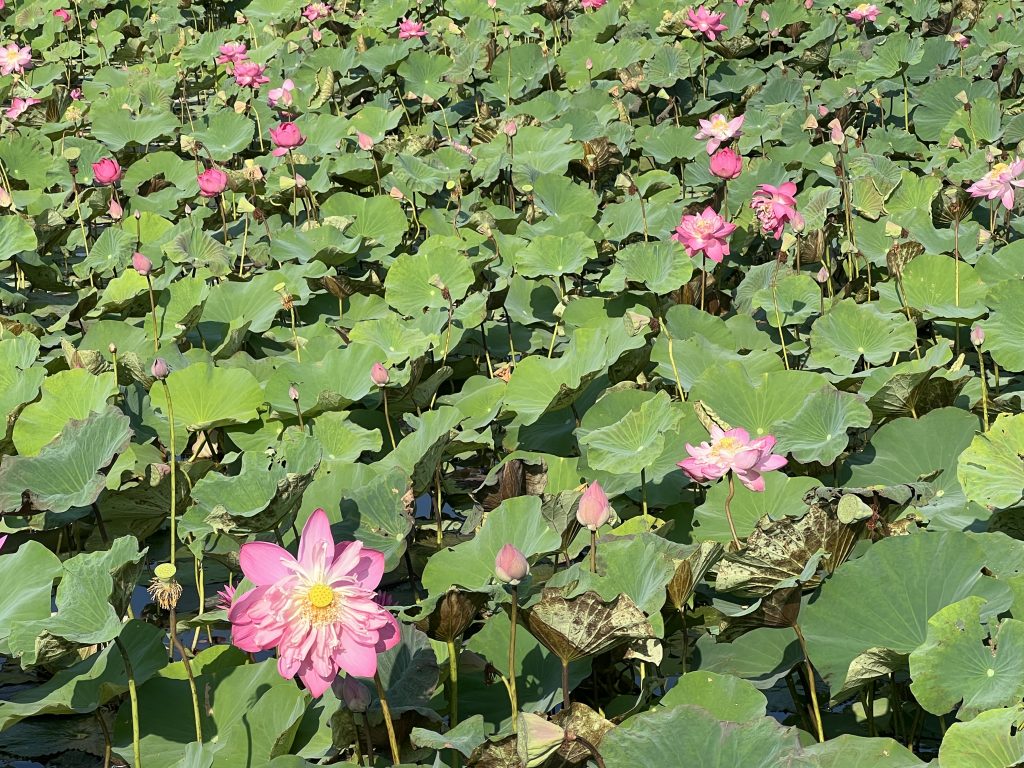
Lotus plantation in Koh Samui
When a painting finds its home
Original art is a very personal purchase.
People rarely choose a painting simply because it matches the furniture. They choose it because something speaks to them. Sometimes they cannot even explain why. A particular colour, shape or feeling simply feels right.
If this lotus painting creates that feeling for you, perhaps it has already begun a conversation.
Perhaps it reminds you of a peaceful garden you once visited.
Perhaps it brings back memories of travelling through Asia.
Perhaps it simply offers a quiet place for your eyes to rest after a busy day.
Whatever the reason, every collector creates a new chapter in the life of an artwork.
I always find that thought rather beautiful.
The painting leaves my studio carrying my story, but over time it becomes part of someone else’s story as well.
If this lotus has found a place in your imagination while reading these words, perhaps it may one day find a place in your home.
I would be honoured for this gentle conversation between flower, leaves and seed pods to continue with you.
ABOUT THE AUTHOR
Inessa Falina is a London-based botanical artist and teacher. A fellow of the Linnean Society in London and member of the Chelsea Physic Garden Florilegium Society and Society Botanical Artists, she has exhibited at The Mall Galleries and Chelsea Old Town Hall, with work held in private collections across Europe, the USA and Australia. Through her art and teaching, she helps people slow down, observe nature deeply and find calm through the practice of painting. You can follow her work on Instagram at @inessa.falina
— Inessa

From Baan Patcharintorn, the owner of The Nature Samui:
Dear Inessa,
I have just finished reading your beautiful article, and I am deeply touched.
Thank you for seeing not only the lotus flowers but the whole story of life that exists in our lotus garden at The Nature Samui.
Your words made me look at our lotus field with new eyes. I especially loved your reflections about the ageing seed pods, patience, and the beauty that exists in every stage of life.
It is such an honour that our lotus garden became part of your artistic journey, and I am truly grateful that you shared The Nature Samui with your readers.
Your article is so beautiful and meaningful that I would love to ask your permission to share it on my Facebook page, as well as on The Nature Samui and Baan Patcharintorn Samui pages. I believe many people would be inspired by your words and your beautiful way of seeing nature.
Thank you for transforming our lotus into such a meaningful work of art and such a heartfelt story.
I truly hope to welcome you back to Koh Samui again someday.
With love and gratitude,
Patcharee (Ta) ♥️