Introduction
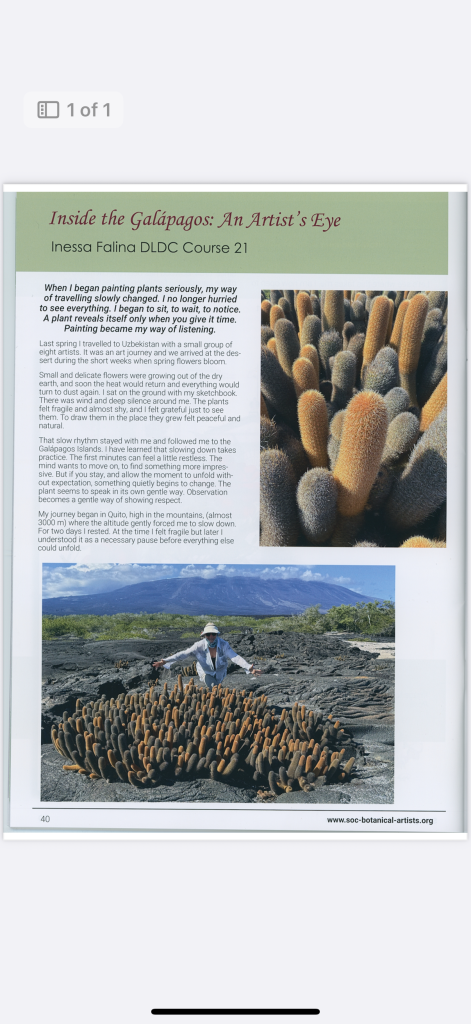
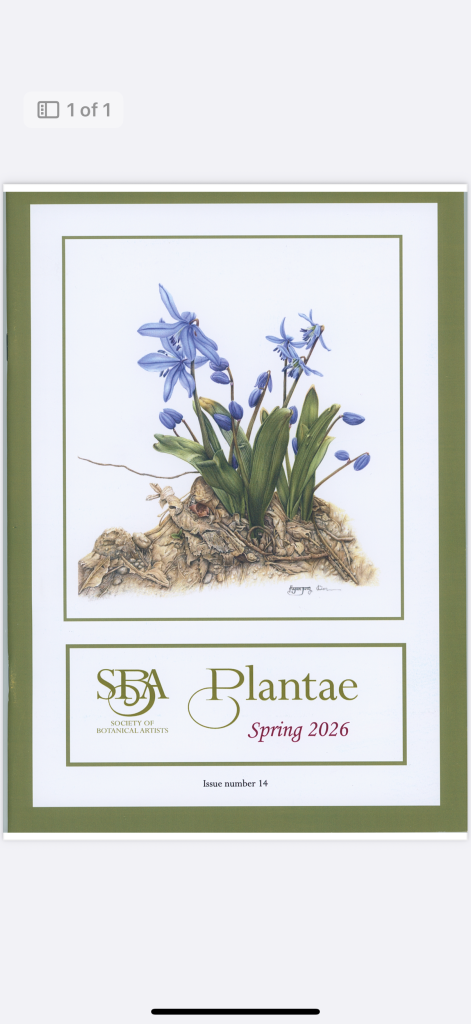
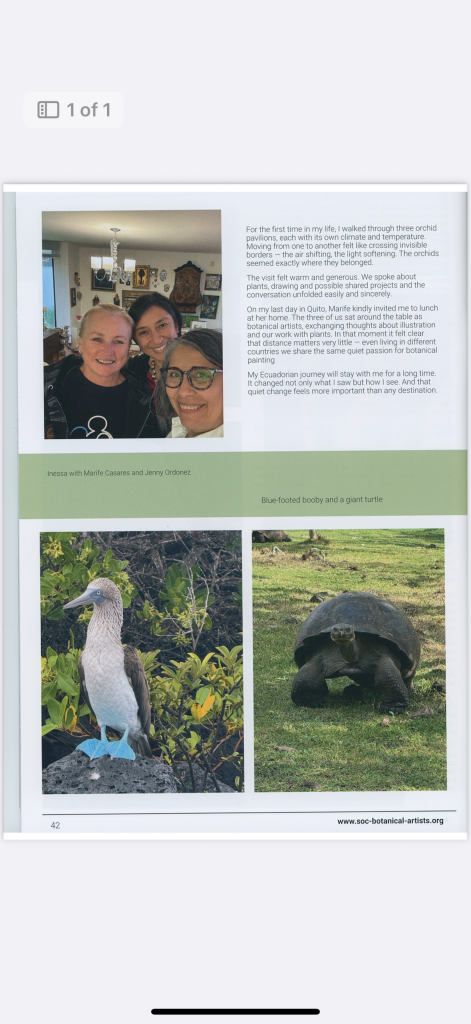
My article Inside the Galápagos: an artist’s eye was published in the spring–summer edition of the Society of Botanical Artists magazine.
This blog shares the botanical artist Galápagos journey behind that article – six week among the island.
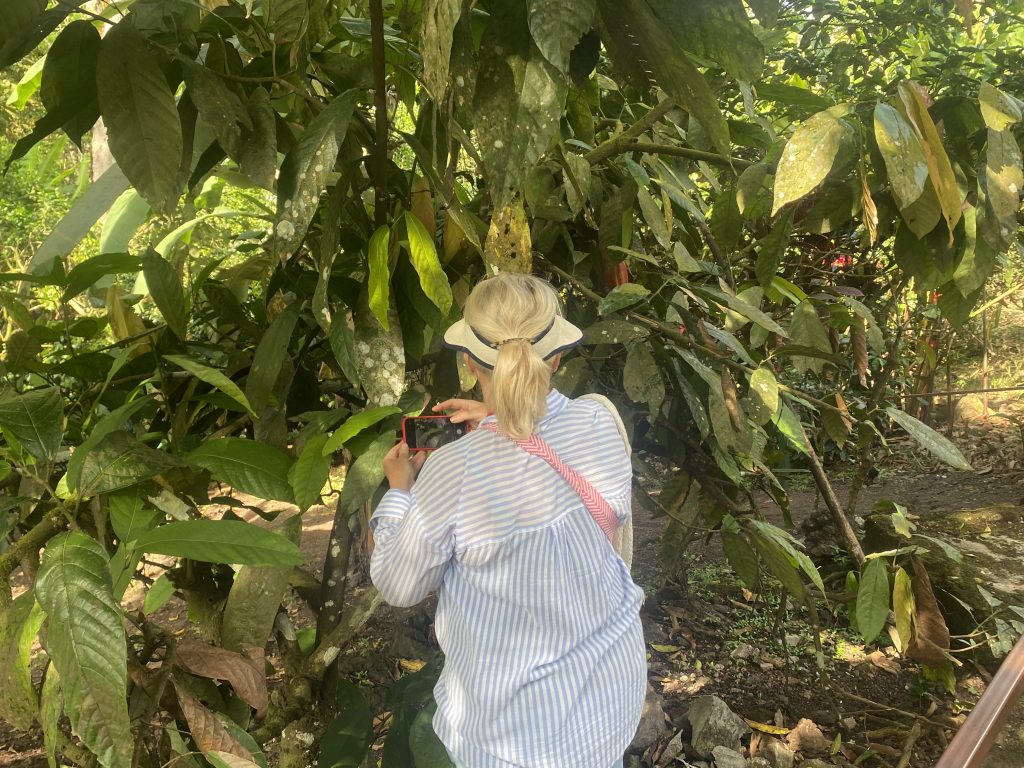
Exploring cacao plantation in Galapagos
A journey with expectations
At the beginning of the year I travelled to the Galápagos Islands. I went there with strong expectations shaped by books, research and imagination.
I expected to see tropical plants, large colourful flowers, rich vegetation and dramatic landscapes to paint.
As a botanical artist I was ready to observe and document this unique environment through drawing and painting.
But the reality was very different from what I imagined.
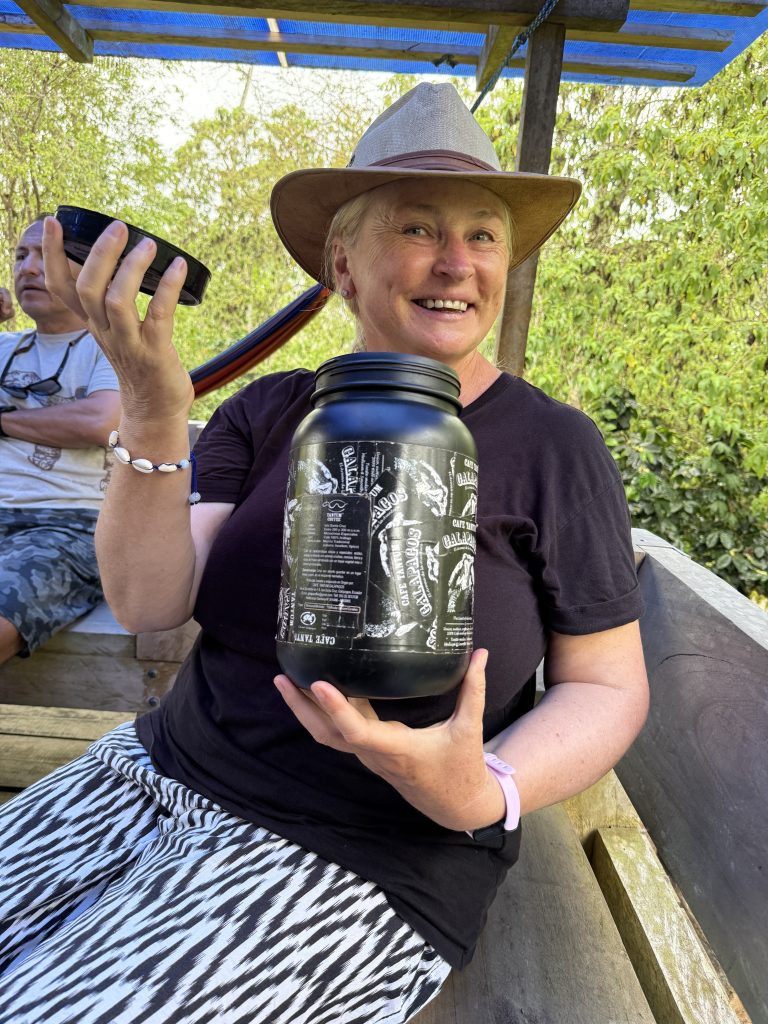

Visiting coffee plantation Tantum in Galapagos
A different kind of flora
Instead of large tropical flowers I mostly found small white and yellow flowers.
This surprised me and raised many questions. Why were the colours so limited? How did plants survive in such a unique environment?
These questions became the starting point of my deeper exploration of the islands.
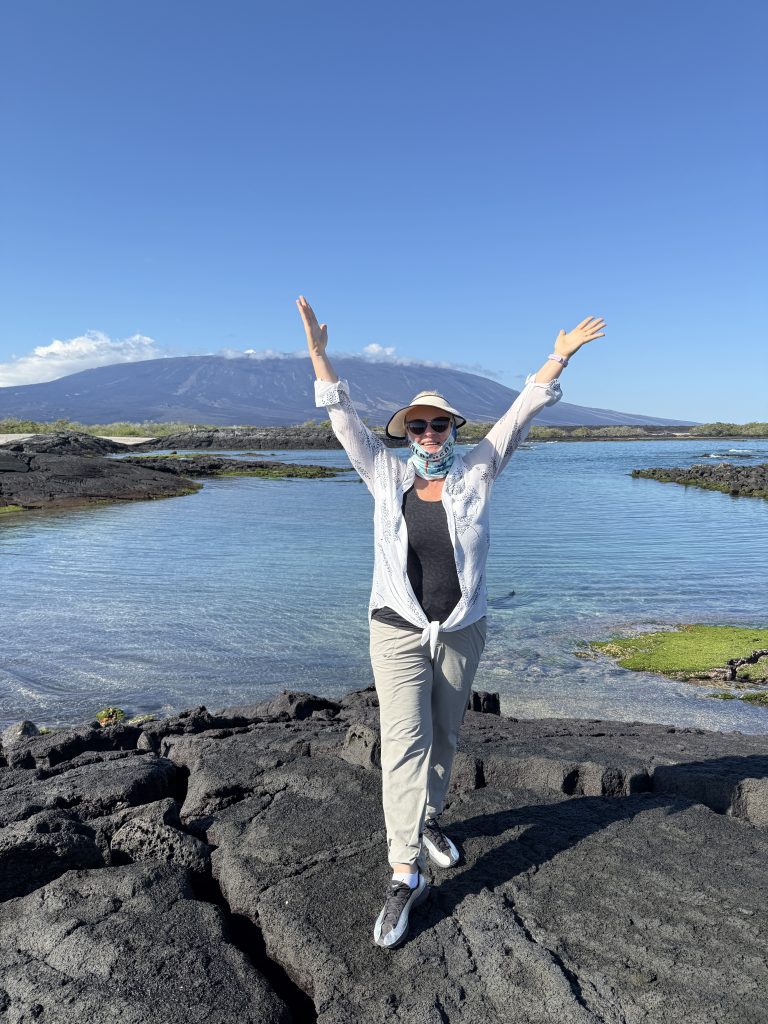
Galápagos Islands cruise
Life surrounded by animals
In the Galápagos you are always surrounded by animals. During my morning swims I often saw marine iguanas swimming less than one metre away from me.
Once a sea lion decided that a bench I was sitting on belonged to him. He clearly did not want to share it. He barked loudly and pushed me off the bench with surprising confidence.
I had no choice but to agree. He was much heavier than me and in the end I was the guest on his island.
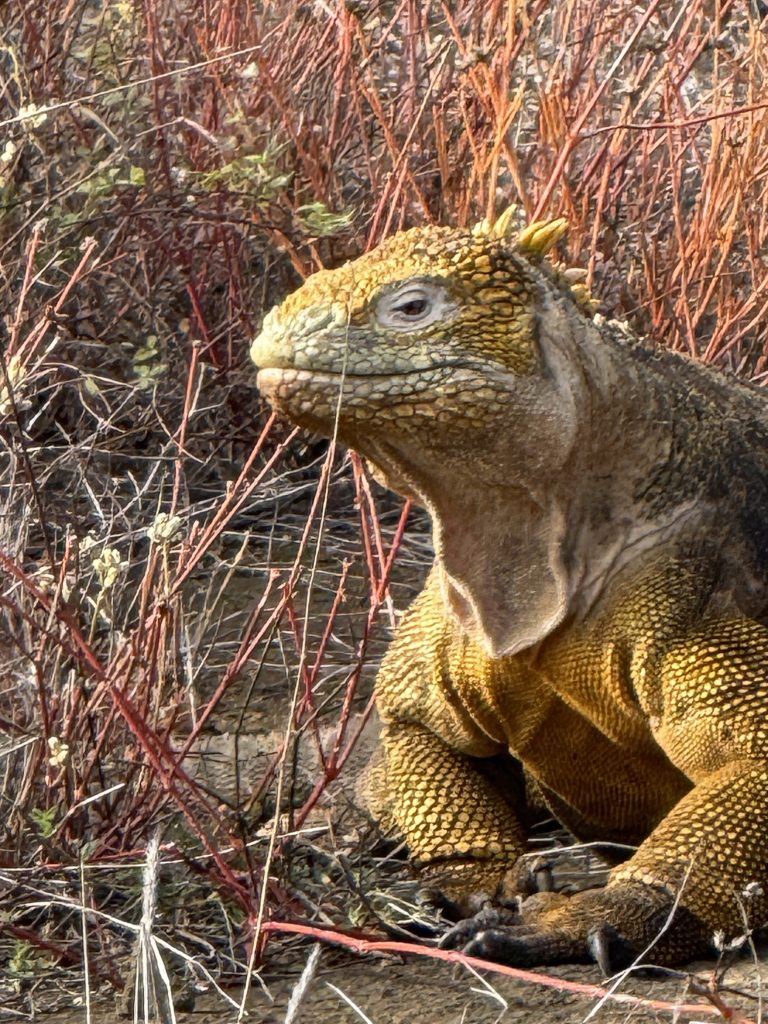
Iguana
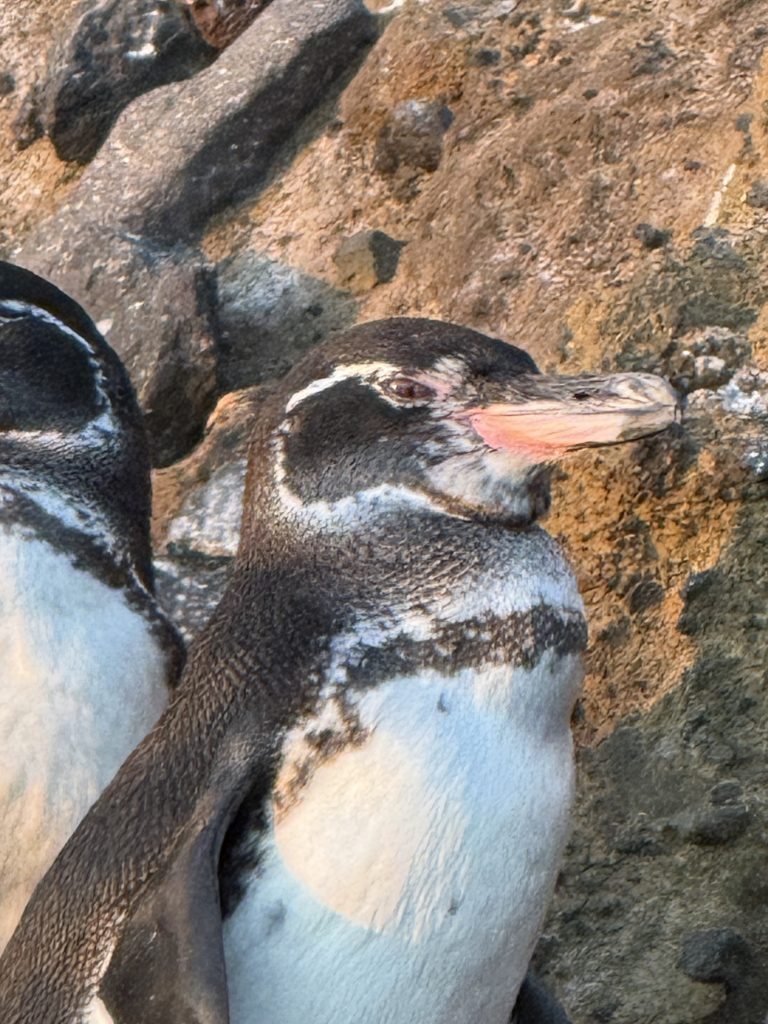
Galapagos penguins
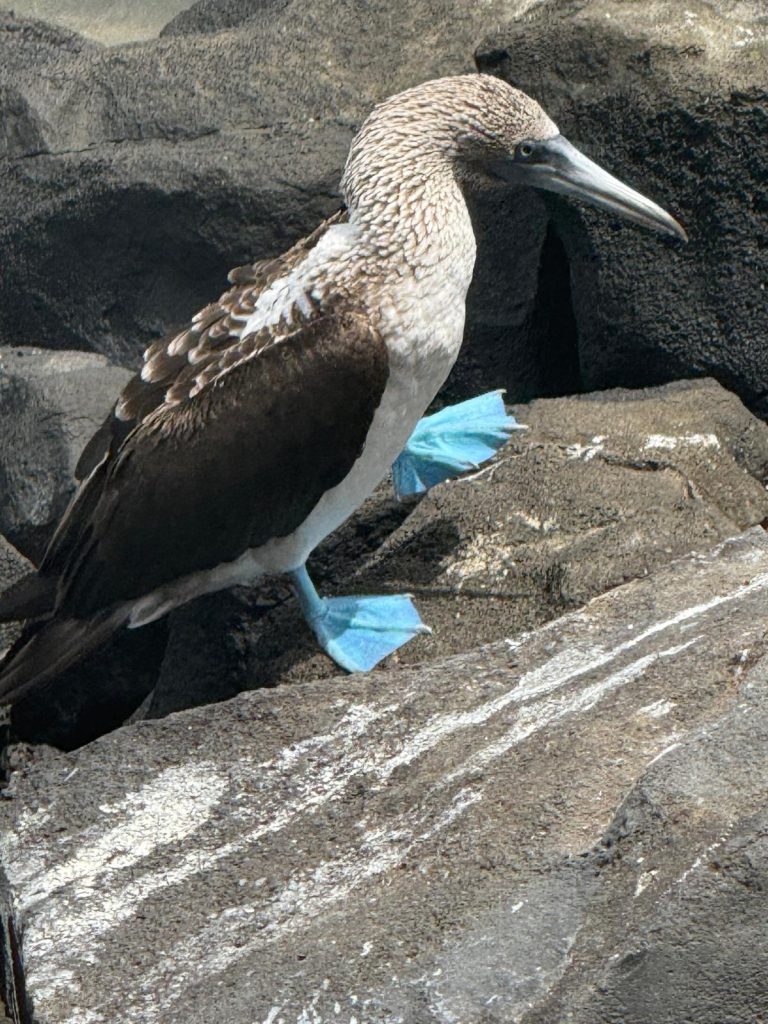
Blue footed booby
Research at the Charles Darwin Research Center
To understand more I spent time at the Charles Darwin Research Center, established in collaboration with the Galápagos National Park to support conservation and scientific research.
Each day followed a simple rhythm.
In the morning I would walk along the coast near the centre. By late morning I was in the library studying scientific notes, reading research papers and speaking with scientists working on the islands.
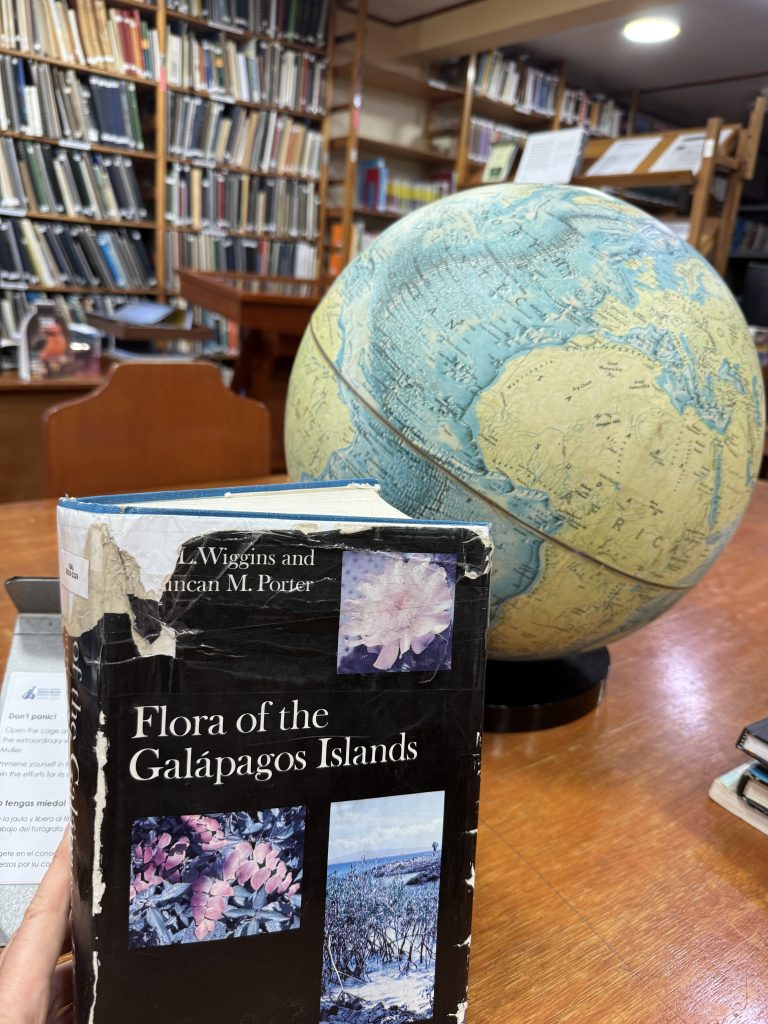
In the library of the Charles Darwin Center
This experience gave me a completely new perspective on the Galápagos ecosystem.
The role of an endemic bee
During my research I discovered something fascinating.
There is an endemic bee in the Galápagos that plays an important role as a pollinator. This bee recognises mainly two colours: white and yellow.
As a result, many native plants evolved in these colours over time.
This simple biological detail helped explain what I was seeing in the landscape.
It felt like a key that unlocked the visual language of the islands.
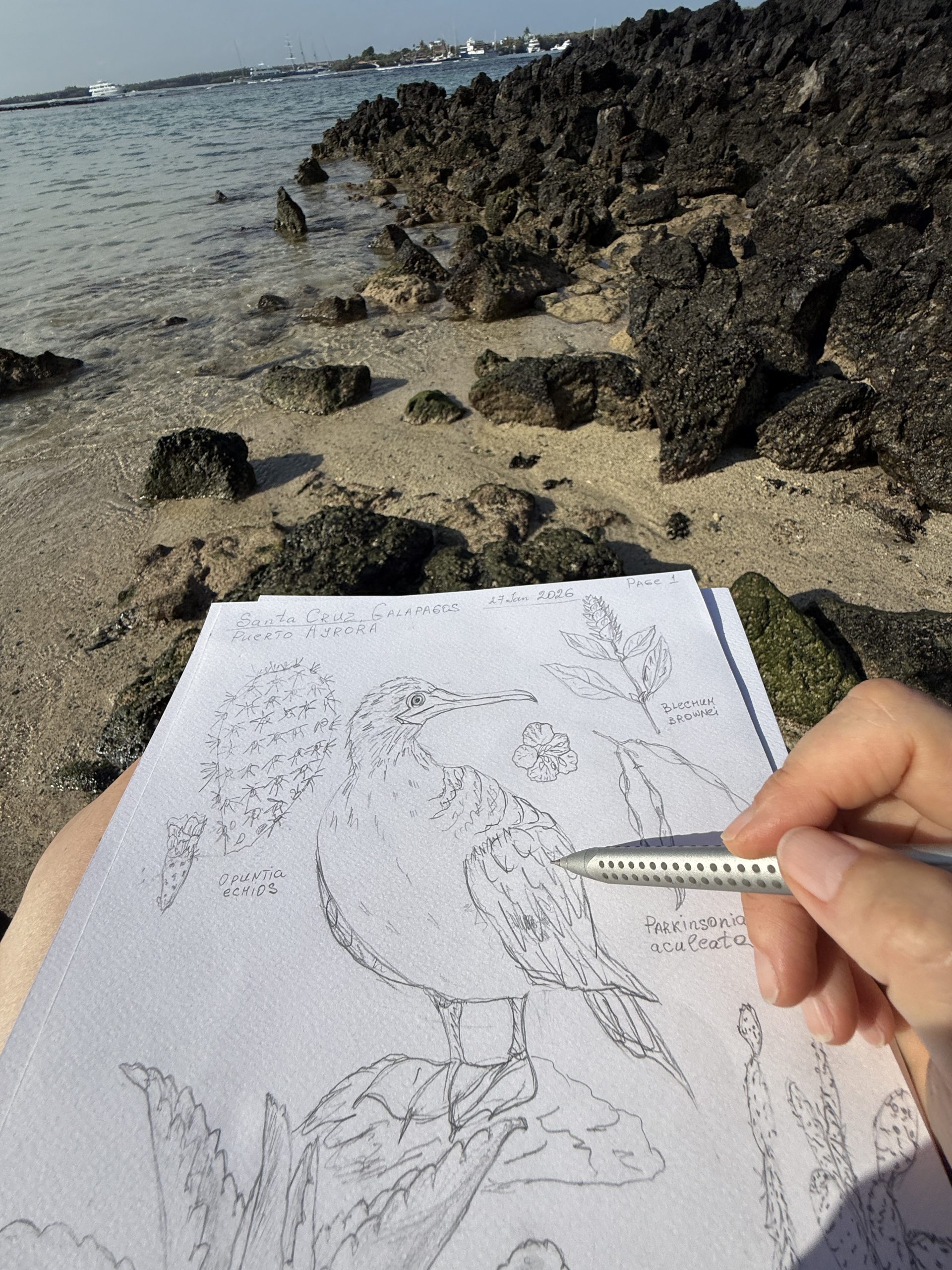
Sketching on the beach in the Darwin Center
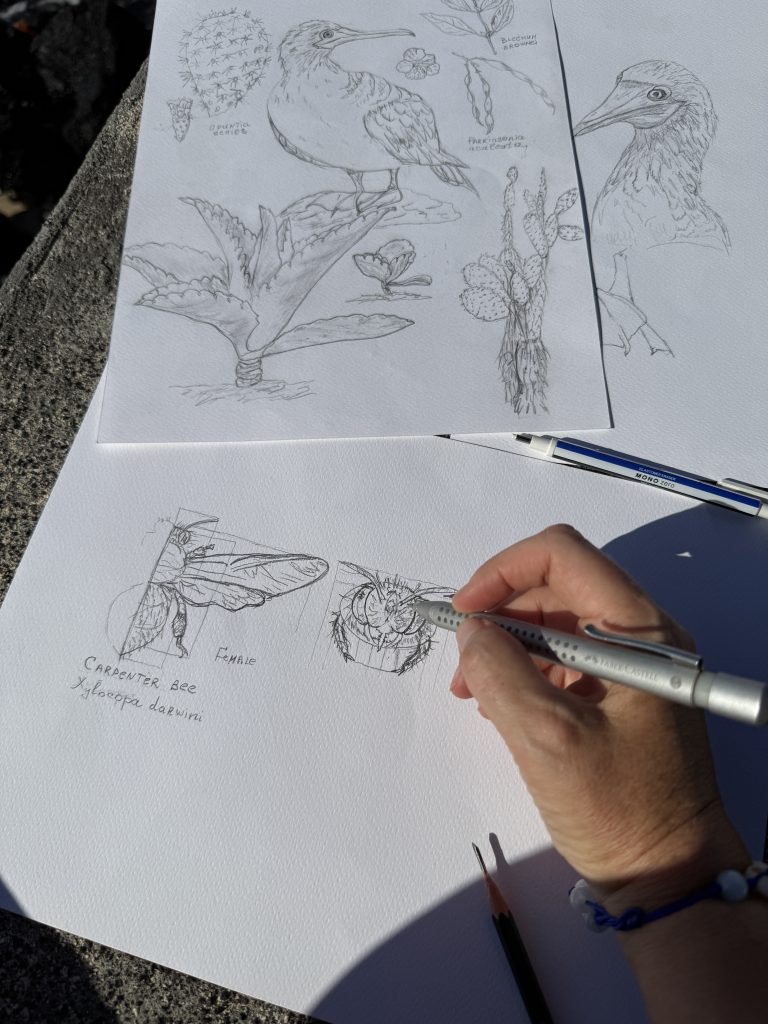
Sketching the Galapagos endemic bee
A deeper understanding of nature
At that moment I understood how interconnected everything is.
Even the smallest species can shape the appearance of an entire ecosystem.
It changed the way I think about plants, colour and observation as a botanical artist.
Conservation and future restoration
During my stay I also learned about a long-term programme dedicated to restoring the flora of the Galápagos over the next 50 years.
I exchanged emails with scientist Patricia Jaramillo Díaz, who is leading part of this work.
This highlighted how important long-term scientific and conservation efforts are for protecting fragile island ecosystems.
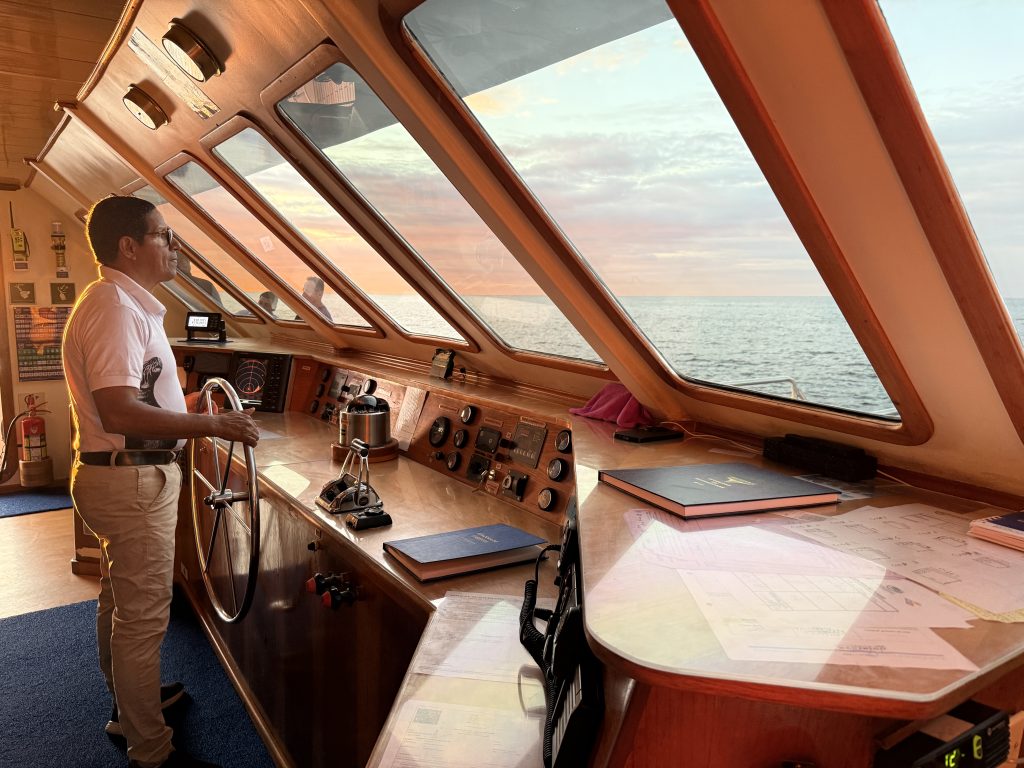
Crossing equator by boat
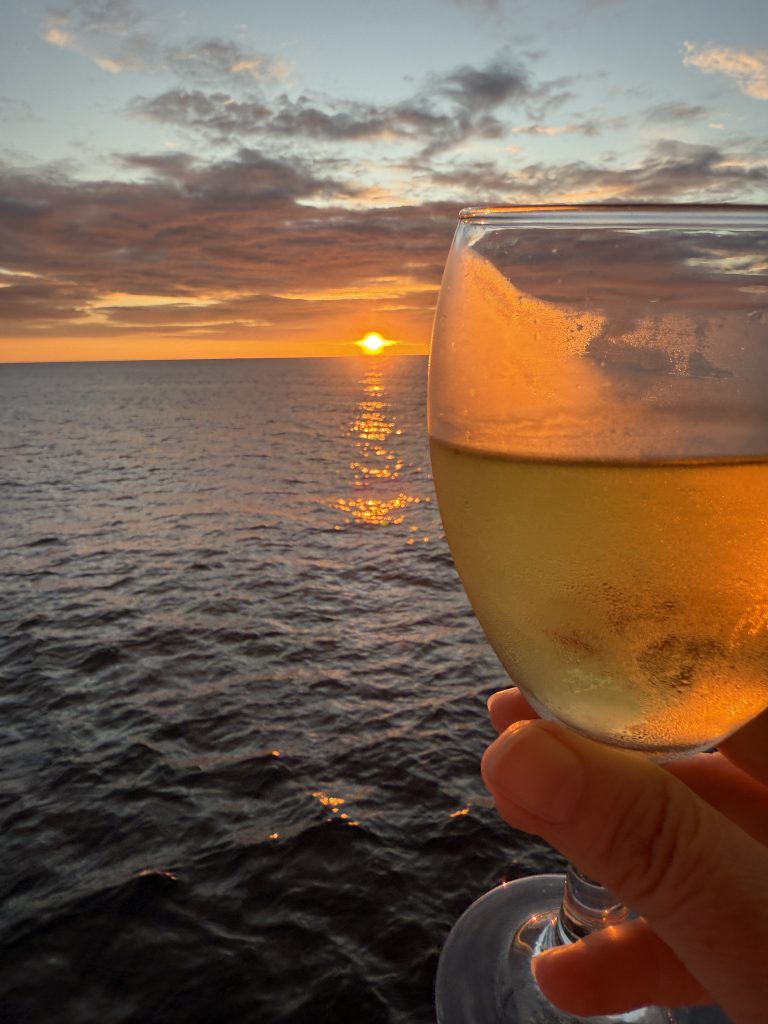
Encounters with artists and local life
During my time on the islands I also met local artists and photographers.
Each of them had a different way of interpreting the landscape. These conversations added another layer to my experience and helped me reflect on my own artistic approach.
Conclusion: how the journey changed my work
My six weeks in the Galápagos were not only a travel experience. They became a research journey that changed my understanding of nature.
I returned home with a different way of seeing plants, colour and environment.
I now understand more clearly how observation, science and art are deeply connected.
We are only guests in this world and nature always follows its own quiet logic 🌿
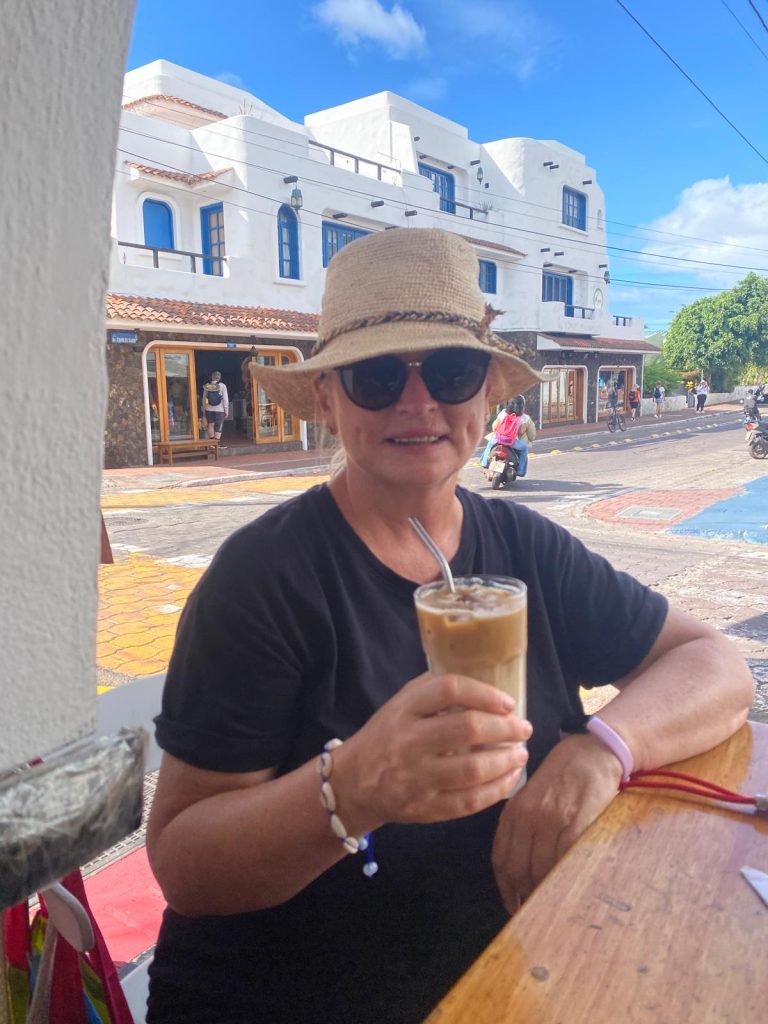
Morning iced coffee before swimming
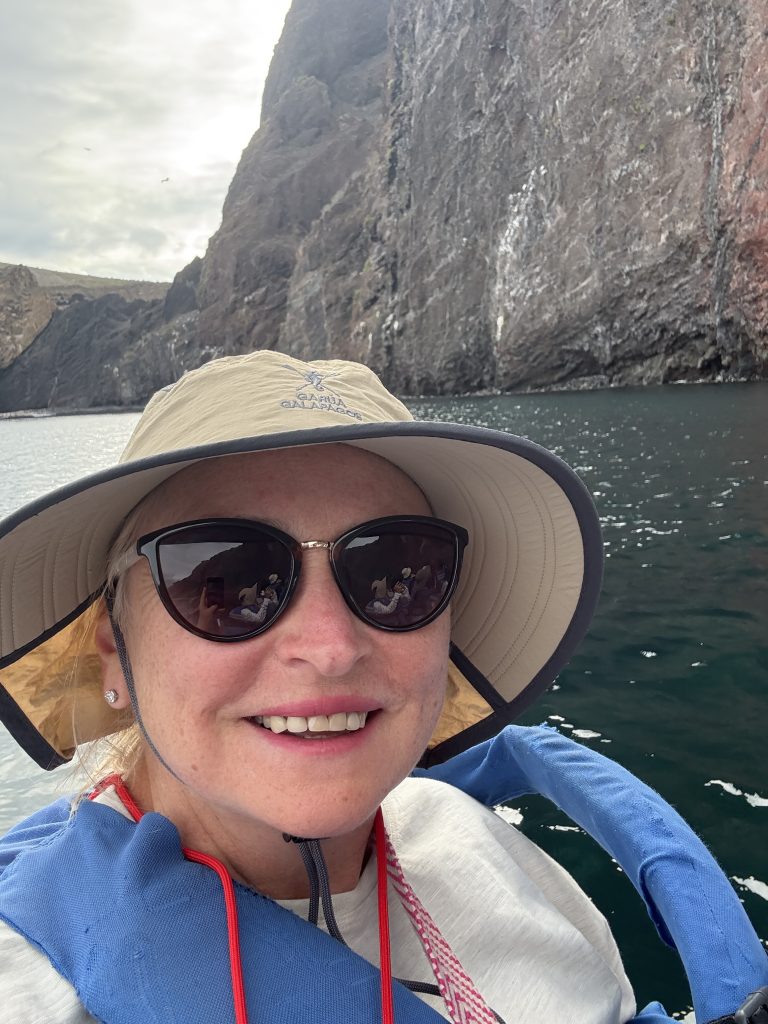
Galapagos cruise
ABOUT THE AUTHOR
Inessa Falina is a London-based botanical artist and teacher. A fellow of the Linnean Society in London and member of the Chelsea Physic Garden Florilegium Society and Society Botanical Artists, she has exhibited at The Mall Galleries and Chelsea Old Town Hall, with work held in private collections across Europe, the USA and Australia. Through her art and teaching, she helps people slow down, observe nature deeply and find calm through the practice of painting. You can follow her work on Instagram at @inessa.falina
— Inessa